  |
 |

|
  Singers (H)
This section also includes people who were primarily actors but fulfilled either non singing roles, which were sometimes included in English opera of this era, or in roles that did not make great demands on vocal ability. A few have been included because they were namesakes or relatives of English opera performers and so, hopefully, help avoid any confusion that might arise. Kurt Gänzl, Victorian Vocalists, (Abingdon, UK: Routledge, 2017) describes the lives and careers of around 100 Victorian singers from different countries and backgrounds but all of whom have some connection through singing Italian or English opera in London. The singers covered are listed here. Please see the section on the main Singers page for provisos about the material included here. Please email englishromanticopera@gmail.com with any comments and suggestions about errors or further material.
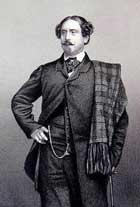
Haigh, Henry (1831-1904)
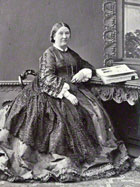
Haigh-Dyer, Madame -
Elizabeth Mary Dyer
(1834-1899)
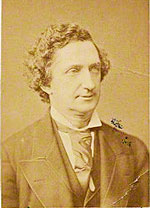
Haigh, Edwin Winter (1828-?) Edwin was Henry Haigh's older brother. He was a pianist and organist although later became a bass singer employed mainly in music halls and concerts.
Haigh, Joseph Joseph Haigh was active in Britain in the 1840s and 1850s. An advertisement in the Morning Post (Nov. 24, 1842) in which he announced that he was setting up a vocal academy (three guineas for a course of twenty four lessons) claimed that he had "studied many years in Italy". He was visible in London until July 1843 but perhaps it was then that he went back to Italy for some years as a concert in June 1850 was billed it as his first since his return from Italy. It is not known whether he was related to Henry and Edwin.
Haines, John Thomas (1837 - 1893)Haines was the son of John Thomas Haines, actor, playwright and librettist [1]. Haines sang in the premiere of Smart's Berta or The Gnome of the Hartzberg in 1855 at the Haymarket and in the London premiere of Loder's Raymond and Agnes at the St James's in 1859. In 1860, Haines married Adeline Cottrell (Adeline Clark). From then on, his career was as conductor or musical director, usually of touring opera companies and on, at least, one occasion in 1875 as joint manager of one [2]. [1]The 1860 registry entry for his marriage to Adeline Cottrell names his father as John Thomas Haines, deceased, author. [2] Staffordshire Sentinel (Feb.23, 1875) reported a decent performance marred by the poor audience attendance
Halford, Robert (1805 - 1845)There were at least three theatrical Halfords around the 1830s and 1840s, although his name was actually Hall. The obituary in The Era (June 5, 1845) listed Robert Halford as having played at The Lyceum and it was thus likely to be him in the premiere of Macfarren's The Devil's Opera. He was an actor and comedian. He was said to be the proposer of the General Theatrical Fund.
Hammond, William John (1797 - 1848)Well known as a theatre manager as well as playing and singing comic roles. The only English opera premiere that he appeared in was Rooke's Amilie. He began his acting career early with seasons at several southern theatres before making his London debut at the Haymarket in 1821. To give himself more opportunities he moved first to York and then to Liverpool, where he started his management career He then moved back to London to take on the New Strand Theatre in London with his brother-in-law, the playwright Douglas Jerrold. Unfortunately he then moved onto managing Drury Lane in 1839 and ended up bankrupt. He resumed his career in Liverpool and later in London before sailing to New York in 1848 where he died shortly after arriving.
Harland, Julia - Julia Susannah Wallack (1825? - 1872)Harland was born in the U.S., the daughter of the actor Henry Wallack. She appeared in the US but by 1843 was in London where she developed her career. By 1854, she was the leading soprano in Elliot Galer's Grand English Opera Company and in the autumn of 1855 moved to Henry Corri's company. In March 1856, she had her own company but never actually appeared with it choosing to skip the planned venue in Gloucester and sail to Australia, where she spent the rest of her career. Kurt Gänzl has a web page on her - https://theatreheritage.org.au/component/tags/tag/julia-harland and Graeme Skinner has an entry - https://www.sydney.edu.au/paradisec/australharmony/register-H-2.php#HARLAND-Julia
Harley, Mr - John Pritt Harley (1786-1858)A well known leading actor mainly known for his comic roles. He appeared in the premieres of Hullah's The Village Coquettes (1836) at the St James's, Rooke's Henrique (1839) at Covent Garden and Balfe's The Enchantress (1845), Forbes The Fairy Oak (1845) and Balfe's The Bondman (1846) at Drury Lane.
Harrison, Mr - William Harrison (1813 - 1868)
Hartley, MrHartley appeared in the premiere of Meyer Lutz's Zaida or the Pearl of Granada at the Royal Amphitheatre, Liverpool, in February, 1859. Hartley appeared in other operas in Galer's Liverpool visit but was not mentioned after that. He was possibly a member of Galer's chorus, whose names would not ordinarily be included.
Hatton, Mr - John Liptrot Hatton (1809-1886)
Hayes, HenryHe was probably the Mr Hayes who was part of Lucy Escott's company in New York in 1859[1] and who must then have sailed to Britain. The Era (July 22, 1860) advertised the availability of Hayes who was said to have attended the New York Academy of Music and was the second tenor of the National English Opera Company. This was the one featuring the Haighs rather than one managed by Tully. Hayes was in Newcastle in the autumn of 1862 and then toured with first Henry Manley's and then George Burt's companies in 1863 flowed by George Loveday's company and the British Operatic Association in 1864. When the latter went to Belfast in early 1865, Hayes was listed as Secretary and not as one of the singers. However, later in 1865, he joined Galer and Reeves's company at the New Royalty Theatre and sang in the premieres of Lutz's Felix or the Festival of Roses in October 1865 and Mallandaine's Love's Limit and Sylvia, the Forest Flower in early 1866. Following the New Royalty, he toured with Thirlwall and Galer's New Royalty Burlesque Company, which had become Thirlwall and Corri's by mid year, and then a few provincial bookings. However, nothing has been found after summer 1866 so possibly he left the profession, he never rose higher than second tenor, or perhaps returned to the U.S. Of his performance in Sylvia, Lloyd's Weekly Newspaper (Feb. 25, 1866) said that "Mr Hayes is a welcome acquisition to the company". On the other hand, the Newcastle Weekly Chronicle (Feb. 24, 1866) noted that Hayes was one of the singers, "a gentleman who showed, while in Newcastle[2], that he had much to learn". [1] Katherine K. Preston, Opera on the Road: Traveling Opera Troupes in the United States, 1825-60. (Urbana and Chicago: University of Illinois Press,1993), p.249 fn 92. [2] His last visit to Newcastle was probably that with Loveday's company in July 1864.
Healey, Miss - Mary Ann PrinaHealey appeared at London theatres in the 1820s and probably later. She married the pianist and organist John Prina [1] but the marriage broke down through her problems with drink. She does not seem to have had any connection with English opera. She was not Fanny Healy (Healey). [1] "Mr Prina (the husband of that pretty little creature Miss Healey)", Oxberry's dramatic biography and histrionic anecdotes. Vol. 4. (London: George Virtue,1826), p.252. The Morning Chronicle (Sep. 12, 1850) claimed that she had married the composer Joseph De Pinna and that he had died. This appears to be a confusion with Prina, who had died in 1841, De Pinna was still alive.
Healy, Miss F. - Fanny Healy (sometimes spelled Healey) also later Mrs F.E.Grosvenor.
Healy, Miss S. - Sarah Healy (or Healey)She was at the Marylebone in 1848 through to early 1850. She never seems to have performed English opera
Healy, MrHealy seems to be one of those seasoned professionals who made up the secondary ranks of the London theatre. A Mr Healy appeared at Covent Garden in 1818 and then at many of the London theatres until the end of the 1830s. There was then a Mr Healy who appeared as a musician in the early 1840s, which may be him. He appeared in the revival of Balfe's Catherine Grey at the English Opera House in late July and early August, 1837 and in the premiere of Benedict's The Gipsy's Warning (1838). While it is possible that he was related to Fanny Healy, no reference to a connection has been found.
Heath, MrA Mr Heath was primarily an actor but did appear in the premiere of Balfe's Diadeste at Drury Lane on May 17, 1838. He appeared in small parts in several plays at Drury Lane in the 1836-1838 seasons but the Sunday Times (Feb. 4, 1838) did not see fit to mention him in their description of the 1837-1838 company. The next season he switched to the English Opera House. A Mr Heath was also advertised as part of the EOH company in May, 1842 [1]. It seems likely that he was also the Mr Heath who appeared at Drury Lane in the premieres of Balfe's The Enchantress in May 1845 and of Macfarren's An adventure of Don Quixote and Benedict's The Crusaders in February 1846. [1] The Theatrical Observer (My 4, 1842). This was presumably for the summer season
Hemming, Mr - Henry Hemming (1805? - 1849)[1]Henry Hemming seems to have been primarily an actor. He appeared at the Adelphi in 1829 and from then on his career seemed to move between that theatre and the English Opera House (Lyceum). He appeared there in the premiere of Loder's The Covenanters in August 1835 and stayed for the next season. He then went back to the Adelphi and later appeared at both the Haymarket and Covent Garden. He then took over as landlord of the Café de l'Europe, popular with theatrical people and critics. [1] A short obituary in the Observer (Dec 17, 1849) said that Hemming died on December 10, 1849 aged 44, i.e. a birthdate of 1805. An entry on Ancestry has his birth date as December 27, 1803.
Henri, MrVery little is known of Mr Henri. He was not the same person as Mr Henry, a name James Henry Horncastle used for a time. Henri was part of the chorus for Forbes' The Fairy Oak in October 1845 so had probably been hired for the 1845-46 season. He had a small part in Benedict's The Crusaders (1846) and appeared in the premiere of Meyer Lutz's Zaida or the Pearl of Granada at the Royal Amphitheatre, Liverpool, in February, 1859. He was probably a member of Galer's chorus.
Henry, Mr - James Henry Horncastle (1801 - 1869)This is another example where there are several people using the "Mr Henry" title at different times. However, the one associated with English opera in the first half of the 19th century was James Henry Horncastle. His first appearance in London as Drury Lane was in 1820. By the late 1820s, he was at Covent Garden. He then went to Drury Lane, where he sang in the premiere of Balfe's The Maid of Artois in May, 1836, and was listed as part of the 1836-37 season Drury Lane company. At Drury Lane, he sang in the premieres of Benedict's The Brides of Venice (1844), Balfe's The Enchantress (1845), Wallace's Maritana (1845), Benedict's The Crusaders (1846), Lavenu's Loretta (1846), Balfe's The Bondman (1846) and the 1846 revival of Balfe's The Maid of Artois, by which time he was usually calling himself Horncastle. He also sang in the premiere of James Tully's The Forest Maiden and the Moorish Page at the Surrey Theatre on May 31, 1847 and in Loder's Robin Goodfellow at the Princess's (1848). He toured the UK and went to the U.S. twice, firstly in 1837 to 1842 and then 1853 to 1858. The Dramatic and Musical Review (May 16, 1848), p.153, wrote "Mr Horncastle for many years a useful buffo singer at Drury Lane, formerly at Covent Garden, under the name of Henry. He is an actor of quick study and much versatility, being ready at a moment's notice to assume any character". Kurt Ganzl has a long article describing his career on his Kurt of Gerolstein blog.
Herberte, John (1825(?) - 1857)[1]The Times (Sept. 29, 1848) announced Mr Herberte as part of Bunn's Covent Garden company for his short 1848 season and that it was his first appearance on the London stage. His first part was as Count Floreville in a short revival of Balfe's The Bondman on October 11 and 12, in which he "acquitted himself creditably".[2] He then appeared in English versions of several continental operas before his only English opera premiere in Laurent's Quentin Durward on December 6, 1848. With the termination of Bunn's season, he sang in concerts for several years until he appeared in a rare performance of Mozart's La Clemenza di Tito at the Royal Academy of Music in December 1854. He appeared at Drury Lane as Macheath in August 1855 but mainly his career consisted of concerts and provincial opera. The Liverpool Daily Post (Aug. 26, 1856) advertised him as "principal tenor" of a touring company performing English opera. This was probably the company in which he had been in partnership with Henry Corri.[3] Kurt Ganzl has a rather confused mention of Herberte in his blog - https://kurtofgerolstein.blogspot.com/2019/01/ , seemingly identifying him as John Burnett Gadsen. [1] The 1851 census has a John Herberte, music professor, living in London, having been born there, and aged 26. The Era (Sept. 20, 1857) recorded the death "after a most painful and lingering illness" of John Herberte, vocalist, on September 12. [2] The Era (Oct. 15, 1848) [3] The Era (Dec. 27, 1857) recorded the bankruptcy proceedings against Corri and mentioned the partnership with Herberte
Hill, MrThere appears to be no trace of Hill in the press listings so presumably he was just a bit player.
Hill, Mr C. - Charles Hill (1803 - 1874)He seems to have first appeared in Bath in 1827 and then in Newcastle where he stayed for two seasons [1] before moving to the Surrey in 1830. He stayed there until, at least, 1834, when he appeared in Rodwell's The Lord of the Isles. He also appeared at Covent Garden including in de Pinna's The Rose of the Alhambra (1836). He then played in various provincial theatres as well as managing theatres in Brighton and Cheltenham [2]. He seems to have been primarily an actor. He emigrated to North America in 1840[3] where he seems to have acted in Toronto at the end of the 1840s. He died in 1874. [1] Dramatic Magazine (1830), p. 256 [2] John William Cole, The Life and Theatrical times of Charles Kean (London: Richard Bentley, 1860), p.326; Cheltenham Examiner (July 15, 1840) [3] Graeme Skinner, website for Hill's sister, Maria Taylor - http://sydney.edu.au/paradisec/australharmony/taylor-maria.php
Hill, Mr T - Tom Hill (1794 (?) - 1851) [1]Hill specialised in commedia dell’arte roles: clown, pantaloon. A Mr T Hill was in a pantomime in Manchester in 1825 before appearing at the Surrey Theatre in London in 1826. He then seemed to move between provinces and London. He was in the Princess's Theatre pantomimes in the winters of 1845 and of 1847 and appeared in Loder's The Night Dancers (1846). He does not seem to have been related to Charles Hill. [1] Lloyd's Weekly Newspaper (June 8, 1851) obituary stated his age as 57.
Hincks, Miss AThe first mention of Hincks appears to be at a Distin family concert in Monmouth on August 10, 1842 [1]. She was advertised as from Covent Garden (presumably the chorus) and the Nobility concerts. She was then listed very infrequently, mainly in provincial concerts, until 1854. In the 1846 season, she was at the Princess's Theatre and appeared in the premiere of Loder's The Night Dancers. [1] Monmouthshire Beacon (Aug. 6, 1842)
Hodges, MrThere were several Mr Hodges but generally the others have an initial [1]. The Illustrated London News (May 31, 1845) said of a Mr Hodges' attempt to sing an aria at the Strand, "We have seldom heard a more dreary attempt". Mr Hodges was at Drury Lane for, at least, four seasons beginning with the 1843-1844 season. He was mainly in the chorus but played small parts in Balfe's The Enchantress (1845) [2], Wallace's Maritana (1845) and the revival of Balfe's The Maid of Artois (1846) and in the 1846 premieres of Macfarren's An adventure of Don Quixote on February 2, Lavenu's Loretta on November 9 [3] and Balfe's The Bondman on December 11. A Mr Hodges appeared again in the premiere of Balfe's The Sicilian Bride at Drury Lane in March 1852 and Balfe's The Devil's in it at the Surrey in July 1852. The "Mr Hodges" at Gravesend theatre referred to in a legal case in 1847 was Mr C. Hodges [4]. He may have been the Mr Hodges in the chorus for the theatricals at Windsor Castle for Queen Victoria in 1851 but that was more likely Mr C Hodges. It may be that the Mr Hodges from Drury Lane had died or retired in which case Mr C Hodges might well have been listed as Mr Hodges as there would have been no risk of confusion. [1]The Sunday Times (Mar. 29, 1847) answered "no" in reply to the question as to whether the Mr Hodges at Drury Lane was the same person who had been manager and first tenor at New Orleans. That must refer to Coplestone Hodges back around 1834-35. In any case, in May 1845, Mr Hodges was singing in The Enchantress at Drury Lane while Mr C. Hodges had just taken over the Strand theatre. However, elsewhere, such as at Gravesend "Mr C Hodges" is often referred to as "Mr Hodges". [2] Hodges was listed as in the chorus on the May 19, 1845, playbill but was listed as Lazarillo in the May 1845 published libretto [3] Hodges was listed on the playbill for the November 21, 1846, performance of Lavenu's Loretta as the Provost Marshall. He may have taken over the part from Mr Howell whose name appeared in that part in the libretto and in some press advertisements. According to the libretto Hodges was playing Cordova. [4] West Kent Guardian (June 19, 1847)
Hodges, Mr I.Mr I. Hodges was listed on the playbill for the November 21, 1846, performance of Lavenu's Loretta as playing Cordova. It looks like he might have taken over from Mr Hodges, who in turn took over from Mr Howell as Provost Marshall. It is not clear whether the two Hodges were related.
Hodges, Mr C. - Coplestone Coward Hodge(s) (1806 - 1855) [1]Mr. C. Hodges was Coplestone Coward Hodge, who used Hodges as a stage name. He was a pupil of the Royal Academy and appeared in their 1829 season of operas. The New Monthly Magazine (Jan. 1, 1829), p. 19, spoke of his "tenor voice, though weak, is soft and pleasing, and appears to have received good cultivation; but, on the whole, we do not feel warranted in anticipating striking future success". As it turned out a prescient verdict. He made his professional debut at the Olympic in January 1831 [2]. Later that year, he married Ann Nelson. They were reported to be taking over the Hastings Theatre to some skepticism with him described as "still more the complete novice" [3]. In 1832, he was at Covent Garden. Early in 1833, they took over the Chichester Theatre. Later that year the couple went to New Orleans [4] and they continued to perform in the US, often together, for around a further ten years. At some point the marriage broke down but, as late as mid 1844, he was appearing in bills with Nelson and her soon to be "husband", John Brougham [5].
By October 1844, Hodges had returned and was at the Grecian Saloon [6]. In May 1845 he became the manager of the Strand Theatre [7]. A little later he was at Gravesend for an 1847 summer season and then at the Casino de Venice in London. No mention of Mr C Hodges has been found after 1847 until 1851 when he was shown in the 1851 census described as a Professor of Singing with a son, Frank, living with him. This was his son by Ann Nelson. He also had a new wife even though it is not clear whether he had ever divorced his first wife. He may have been the Mr Hodges in the chorus for the theatricals at Windsor Castle for Queen Victoria in 1851 and in the premieres of Balfe's The Sicilian Bride at Drury Lane in March 1852 and Balfe's The Devil's in it at the Surrey in July 1852 . [1] The 1851 Census for C.C.Hodges works out at a birth year of around 1813 but Coplestone Coward Hodge was registered as having been buried on April 19, 1855, died aged 49, i.e. a birth year around 1806. Ancestry.co.uk includes a baptism record with a date of March 14, 1806. [2] The Standard (Jul. 14, 1831) [3] Sunday Times (June 26, 1831). It would give weight to 1806 or thereabouts being the more likely birth year. [4] The National Banner (June 17, 1835) named them as part of the visiting New Orleans company to Nashville. June C. Ottenburg, Opera Odyssey. (Westport: Greenwood Press, 1994), pp.72-73 noted that a Charles Hodges sang the part of Robert in the English version of Meyerbeer's Robert le Diable in New Orleans in 1835 but that must be Coplestone Hodges. [5] Louisville Daily Journal ( May 17, 1844), New York Herald (June 26, 1844) [6] The Era (Oct 6, 1844) [7] The Era (May 13, 1845)
Hodges, Mr F. - Francis HodgesSeemed to be mainly active in concerts in the Bristol area from around 1835 - 1840 and then possibly went on to part own a piano shop in Bristol.
Honey, George (1822-1880)
A blog that includes
more detail on his
life can be found at
https://misssamperrin.blogspot.com/2013/06/ [1] Jennifer Carnell, Mary Elizabeth Braddon and the Victorian Theatre, (Hastings: Sensation Press, 2016), p. 184I [2] llustrated Sporting and Dramatic News (June 5, 1880)
Honner, John James (1795 - 1861) [1]At bankruptcy proceedings in 1833 he was described as a comedian at Drury Lane, playing "low comedy and smart servants" and was paid £2 a week [2]. He took part in the premiere of Balfe's Joan of Arc (1837) and Benedixt's The Gipsy's Warning (1838). He continued in the theatre in minor parts into the 1850s listing himself as "comedian" on his 1851 census return. He performed at the Princess's in the premiere of Loder's The Night Dancers on October 28, 1846. He was the oldest of three brothers, the youngest of whom, Robert William Honner, was the best known. However, there seemed little obvious cooperation between them in the theatre world. Michael Baker, The Rise of the Victorian Actor (New Jersey: Rowman and Littlefield, 1978), p. 63, included the Honners as one of the families of Victorian actors, along with people like the Keeleys, but did not give any details. [1] In his bankruptcy hearing, his age was given as 36 years old, i.e. born about 1797 (The Examiner, Sep. 8, 1833). However, Ancestry.com shows a baptism record at St Anne, Soho, of John James Honner being born to John and Eleanor on May 21, 1795. This agrees with the statements on his census forms [2] More details from his bankruptcy given in The Globe (Sep. 5, 1833). He again petitioned for bankruptcy in 1843 (Lloyd's Weekly Newspaper, Dec.3, 1843) but by the 1851 census the household was able to employ a servant, probably because of his daughter's income because there was no daughter nor servant in the 1861 census.
Honner, Robert William (1809-1852)After starting out as an actor and clown, in 1835 he went into theatre management, including Sadler's Wells, the Surrey, the City of London and the Standard theatres. He was the youngest of three brothers, the oldest being John James Honner. The middle brother, Charles, was the stage manager at Sadler's Wells during Robert's tenancy and afterwards. [1] [1] Email from Charles's great grandson, Simon Honner (July 23, 2021)
Honner, Ellen Mary Ann (1817 - 1873) (in the 1851 census she called herself Eleanor)Daughter of John James Honner, she was initially a music teacher but then moved into the theatre in 1835. Until the early 1850s, Honner performed in a wide range of works from burlesques and pantomime to English opera both in London and the provinces, although mainly in secondary roles. She was in the premiere of Balfe's The Castle of Aymon, the English version of his Les Quatre Fils Aymon, at the Princess's Theatre in 1844 and a member of Tully's English Opera Company during 1848-1849.
Horncastle brothers- a description of the three brothers' careers can be found as part of the article at http://kurtofgerolstein.blogspot.com/2019/10/an-original-broadway-musical-1841.html Horncastle, James Henry (1801-1869) - see Mr HenryHorncastle, George (1799 - 1844)He appeared in the premiere of Benedict's The Brides of Venice (1844) Horncastle, Frederick (1790-1850)He sang in concerts and oratorios, composed and taught but does not seem to have appeared on the stage.
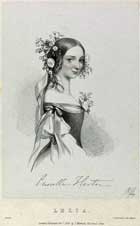
Horton, Miss P. - Priscilla Horton (Mrs German Reed) (1818-1895)Priscilla Horton was said to have had her first role at the Surrey Theatre at the age of 10 but she was probably a year older. From then on, she was a regular feature of London and provincial theatres for the next 50 years,
Kurt Gänzl, Victorian Vocalists (London: Routledge, 2018, p. 304-317) has a detailed chapter on her career. There is a book by David Williamson, focused more on their later career, The German Reeds and Corney Grain: Records and Reminiscences. (London: A.D.Innes, 1895).
Hoskings, MissShe was a child actor (supposed to be about 4 years old) in Lavenu's Loretta at Drury Lane in November 1846. There seems no trace of an older singer or actor of that name.
Howell, Mr.At Christmas 1838, Howell was the Harlequin in the pantomime of which, at that time, the harlequinade was a critical part [1]. He first played Harlequin at the end of 1818 [2] and continued to play it for at least 30 years. Thus, he was primarily an actor and clown. Howell appeared in Balfe's Joan of Arc (1837), Ellerton's Domenica (1838), Balfe's The Bohemian Girl (1843) and The Daughter of St Mark (1844), Benedict's The Brides of Venice (1844), Forbes' The Fairy Oak (1845), Benedict's The Crusaders (1846) and Balfe's The Bondman (1846), all at Drury Lane. He may also have been in the premiere of Lavenu's Loretta (1846) but the evidence is ambiguous. [1] "The harlequinade was essentially dialogue-less and centred on physical action, slapstick, knockabout and comic songs", Jeffrey Richards, The Golden Age of Pantomime (London: I.B. Taurus, 2015), p.2. [2] Public Ledger (Dec. 25, 1818). It referred to him as Mr Howell junior. implying that his father was also in the theatre.
Howlett, Mr.Nothing has been found about Mr Howlett, who appeared in Balfe's The Devil's in it at the Surrey in July 1852.
Howson, Mr. Francis Alfred (1794 - 1863)Howson was a musician and teacher. His main claim to fame came from his daughter, Emma, who became well known in the European opera world as Madame Albertazzi. He was also the father of Francis Alfred Howson junior and John Howson. Francis senior went to Australia in 1844 and died there [1]. [1] A write up on the Howson family can
be found on Graeme Skinner's Australharmony website at
https://www.sydney.edu.au/
Howson, Frank (Francis) Alfred (1817-1869)Francis Howson junior is almost certainly the Mr Howson named in November, 1840, as part of the Barnetts' short-lived company [1]. His father would have been in his mid 40s by then and there never seemed to be any notices of him appearing as a singer, whereas this would have been an early engagement in Farncis junior's long career as a singer. He was said to be a baritone [2]. He appeared in the premiere of Frank Romer's Fridolin on November 26, 1840.
Frank and John Howson went to Australia in 1842 [3]. In 1845, they moved to Sydney and went on to establish their careers in Australia [4]. For some of the time, Frank, his daughters (Emma and Clelia), John and John's son, John, formed a company and put on opera and comedy. On March 31, 1866, the Sydney Morning Herald advertised their last performance before going to the United States. They soon set up an English Opera Troupe with their core set of singers and Frank's son, also called Frank, as conductor. They continued to perform for the next three years, either individually or together, Emma Howson now being the leading performer and son Frank one of the performers. At some point, Frank also took over as manager of the Metropolitan Theatre in San Francisco. On September 25, 1869, the San Francisco Chronicle reported that Frank had died in Omaha, Nebraska, on September 12. In its obituary, the Chronicle said that "he produced plays, operas, operettas, etc in better shape than had previously been done on the Pacific coast". His daughter, Emma, created the role of Josephine in Gilbert and Sullivan's HMS Pinafore. [1] The Era (Nov 8, 1840) [2] Sydney Morning Herald (May 23, 1845) in its review of a concert. [3] A history of the Howson family can be found on Graeme Skinner's Australharmony website
at
https://www.sydney.edu.au/paradisec/ [4] Harold Love, The Golden Age of Australian Opera. (Woollahra: Currency Press, 1981), p.26.
Howson, John (1819-1871)John's career was very much in parallel with his brother's. He went with Frank's family to California but must have returned at some point as he died in Melbourne in 1871. Initially, in the 1840s, he was a tenor singer [1] but by the time he went to California in 1866, he was advertised as a bass [2]. [1] Sydney Morning Herald (May 23, 1845) in its review of a concert. [2] Daily Evening Herald (Aug. 4, 1866)
Hudson, James (1811-1878) (James Holmes) [1]Holmes was from Ireland and took the stage name Hudson. He was described in the Weekly Dispatch (Apr. 1, 1841) as "the most humorous of song writers, and the most comical singer of comical songs, a man unrivalled in his line". According to his obituary in The Era (Mar 10, 1878) he commenced his career in Nottingham and various provincial theatres before going to Dublin in 1834. Seven years in Irish theatres followed before he joined Macready's Drury Lane company in December 1841 [2]. He was usually described as "an Irish comedian" but did appear in serious opera when, on March 1,1841, he took over the part of Count Rodolpho in Bellini's La sonnambula, when Henry Philips was indisposed or at least pretending to be indisposed in order to avoid appearing in Balfe's Keolanthe. The Era (Jan. 2, 1842) thought "he has sufficient animal spirits, but severe study will be necessary to acquire the polish and 'repose inaction' necessary to personate...the creations of elevated comedy". He sang the part of the foolish Florestein in the premiere of Balfe's The Bohemian Girl at Drury Lane in November 1843. Stints at other London theatres followed and by 1849 he was back in Dublin. He then made a short visit to the US[3] but had returned by late 1850 when he and Anna Thillon devised "an entirely new Musical and Dramatic Entertainment" of sketches and songs. These they performed in London and the provinces with much success up to the middle of 1851 when they went to America together with Anna's husband. They stayed for three years performing concerts, their entertainment and opera. He retired in 1855 but came out of retirement to visit his sons in Australia where he also toured for over a year before returning [4]. [1] There is a short section on James Hudson and a larger one on his sons on Graeme Skinner's Austral Harmony website [2] Dublin Evening Packet (Dec. 9, 1841) [3] He made his first appearance at the Broadway Theatre on September 17, 1849 (Joseph N. Ireland, Records of the New York Stage, Vol 2. New York: T.H.Morell, 1867, p. 549) [4] Lincolnshire Chronicle (May 4, 1860)
Hughes, MrHughes appeared in the only performance of Jolly's Mabel (1840) at Covent Garden. By that time John Hughes was dead so it cannot have been him and it was almost certainly not Henry Hughes who was at the Surrey. A Mr Hughes was at the Theatre Royal, Bath, on April 20, 1837, and must be a different man from Mr John Hughes (see below) who was appearing in a small part in Bellini's La sonnambula at Drury Lane, two days later. By April 1839, a Mr Hughes was acting at the Royal Pavilion theatre in London. Perhaps this was the same Hughes. No Hughes was listed in the Covent Garden company list for Charles Macready's final 1838-1839 season (The Odd Fellow, Feb 2, 1839) but one was for Lucy Vestris's 1839-1840 season (Theatrical Observer, Sep. 19, 1840). He does not seem to have been retained for the following season.
Hughes, HenryA Mr Henry Hughes from Newcastle appeared at the Surrey in December 1839. He stayed there several years before moving to the Princess's in late 1846 and then back to the Surrey in 1847. He was acting (business) manager at the Surrey for a time in 1846 [1]. The Era (Nov. 7, 1847) wrote that he "is an admirable melo-dramatic actor". He had moved on to the Adelphi by April 1848 and later that year to the Haymarket, where he stayed for some years. It seems unlikely that he was the Mr Hughes in Jolly's Mabel at Covent Garden in February, 1840, as he wasn't listed as Mr H Hughes and had just joined the Surrey [2] but it might be possible. [1] William G. Knight, A Major London 'Minor': The Surrey Theatre, 1805-1865 (London: The Society for Theatre Research, 1977), p. 217 [2] The Observer (Dec. 29, 1839) noted his first appearance. William Toynbee (ed.), The Diaries of William Charles Macready, Vol. 1 (New York: G.P. Putnam's Sons, 1912), p.228, mentions a Mr H Hughes who appeared in a play with Macready in Exeter in 1836. The other Hughes mentioned in Macready's diaries are probably all referring to John Hughes notwithstanding that the index lists them all under H. Hughes.
Hughes, John (? - 1840)Given the prevalence of the name it is difficult to be sure of who was the Mr Hughes who played the small non singing role in the premiere of Balfe's Joan of Arc (1837). However, it seems possible that it was John Hughes, who was connected with the Drury Lane theatre for 26 years. He was secretary of its Theatrical Fund for 20 years but took other engagements at the theatre as far as his health would allow [1]. [1] The Era (Feb 2, 1840) , The Observer (Apr. 12, 1840)
Hughes, MrsA Mrs Hughes appeared at Drury Lane in 1833 in The Maid of Cashmere [1]. It is not clear whether this was the same person who was at Drury Lane in March 1844 in the Beauty of Ghent and stayed for, at least the 1845 -1847 seasons. She performed in the chorus for Forbes's The Fairy Oak (1845) and had small parts in Lavenu's Loretta at Drury Lane in November 1846 and Balfe's The Bondman, December 1846. [1] Listed in Dance Broadside Collection, New York Public Library
Hughes, Mrs H.Mrs H Hughes was at the Surrey Theatre in 1841 and probably stayed on until, at least, the end of 1847 [1], except for a spell at the Princess's at the end of 1846, presumably moving with her husband. There is no sign of her after 1847 but she may have left when her husband went to the Adelphi in early 1848. She was sometimes listed as Mrs Hughes depending on which paper was advertising [2] but was not the same as the Mrs Hughes above as they were employed at different theatres at the same time [3]. [1] The advertisement for My Neighbour's Wife at the Surrey in The Sun (Sep. 25, 1847) stated that it was her first appearance in 5 years but she had appeared in most years previously [2]The Sun (Mar 14, 1844) listed her as Mrs H Hughes, Bell's New Weekly Messenger (Mar 17, 1844) [3] The Beauty of Ghent with Mrs Hughes was running at Drury Lane at the same time as Mrs H Hughes was in Romeo and Juliet at the Surrey (The Era, Mar. 17, 1844)
Hughes, Mrs R.There seems little sign of Mrs R. Hughes in the 1830s apart from her appearance at the Surrey for the premiere of Rodwell's Lord of the Isles (1835). She did not appear at Covent Garden when the opera was revived in November 1835. There was a benefit for Mrs R Hughes at the Haymarket in August 1840 and she was at Covent Garden in 1842 singing Italian opera in English as well as appearing at the Surrey in 1847 as part of Bunn's company. She may have been the wife of an actor or of a violinist who led the Covent Garden orchestra in the early 1840s.
Hunt, MissAs the surname is relatively common, there is great difficulty deciding the precise person. This is not the Miss Hunt who married Claude Thillon and became the well known prima donna Anna Thillon. An article in the Morning Advertiser (Feb. 25, 1832) mentions a Miss Hunt as a pupil of ballet master Mr S. Turner. It may have been she who performed a Pas de Deux with Master Hunt at the Royalty Theatre in 1823 and continued there for a further three years. In 1828 she was at the Royal Pavilion theatre and stayed there for two years before getting a role at Covent Garden in 1830 and staying a further year. She then appeared at the Surrey and Drury Lane and then at the English Opera House (Lyceum) in 1834 and 1835, where she appeared in the premieres of Loder's Nourjahad and Barnett's The Mountain Sylph (1834). Probably the same Miss Hunt then went on tour in 1836 including to Hull and York. It is not clear what might have happened after that.
|

 |
 |
 |
  |
|
|