  |
 |

|
  Other English Opera Participants
DancersThe dancers included here are those who had a close association with English Opera at this time. Louise, Madame (1810? - ?)
Proche Giubilei, Augustine Clara (1810? - 1848)
ConductorsAnthony, Charles Frederick (1811-1871)Born in Birmingham, by the 1840s he had become a stalwart of the Manchester music scene serving as pianist, organist, teacher, chorus master and conductor. From 1850, he seems to have been often entrusted with training the chorus for opera performances at the Theatre Royal, Manchester, including for the premiere of Loder's Raymond and Agnes in August 1855. Bridgman, Frederick William (1833-1892)The Era (Jul. 1862) described him as "Pianist, Concertinist, Vocalist and Lecturer". He had a number of juvenile appearances as pianist and concertinist and, after further study, he continued this based largely in Edinburgh. He featured in some English concerts in 1857 and in early 1858 was conductor of the Metropolitan English Opera Company that at some point he jointly managed with Rosalia Lanza and Henry Morley. He left that in 1859 and retired from public life for three years but then resumed his career again mainly in Scotland as pianist, concertinist, organist, composer, conductor and teacher. He was working almost up to his death on December 28, 1892. There is an article by Randall C. Merris, "Frederick W. Bridgman and the Concertina", Papers of the International Concertina Association, Vol. 8 (2011), pp. 19-29.
Cooke, Thomas Simpson (Tom) (1782 - 1848)Born in Dublin, Cooke established himself as a vocalist, composer, violinist, orchestra leader, conductor, music shop proprietor and teacher first in Dublin in 1803 and ten years later in London, where he remained for the rest of his life. As Music Director of Drury Lane he conducted Balfe's The Siege of Rochelle (1835) and The Maid of Artois (1836) after the composer had conducted the first few performances.
Kingsbury, Frederick (1815-1892)Kingsbury hailed from Taunton, first appearing in public as conductor at the Taunton Glee Club on September 15, 1834. By 1837, he had set up as a teacher there charging 4 guineas per annum for piano and vocal lessons and five years later was advertised as conducting at the Worcester Festival. He then studied at the Royal Academy for 2 years from 1844 [1]. This move was a little odd given his age and that his career seemed to be underway. He had sung at the Academy but he turned more to the piano and organ as well as conducting. He missed out on becoming organist at Covent Garden Church in 1853. In spring 1855, he was advertised as running a choral school in London before moving on to conduct a season of opera at the City of London theatre in late 1855 and early 1856 after which he went to the Lyceum to conduct further opera. He then joined with James Tully to mount a season of opera at Drury Lane from Easter Monday, March 25, 1856 to July 25, 1856, after which they made an extensive tour of the provinces as the National English Opera Company. In December 1856, he was declared bankrupt. The following year he went back to teaching and published a book on singing, The Voice and Management. He taught Elizabeth Dyer, which had ended in legal action and later was to teach Rose Hersee. By 1860, he had broadened his teaching to include preparing people for the "Operatic Stage". The remainder of his career was spent conducting or accompanying a wide variety of music and performers. In September 1865, he conducted the revival of George Allen's Castle Grim at the New Royalty theatre [2]. He became a professor at the Guildhall School of Music and published a few songs. [1]Taunton Courier (Mar. 9, 1892). This is supported by his appearance in a concert in March 1846 (Daily News, Mar. 23, 1846) [2] According to The Times (Sep. 4, 1865) but The Standard (Sep. 4, 1865) reckoned it was George Allen.
Levey, Richard Michael (1811-1899)[1]Levey was born O'Shaughnessy but was said to have changed his name to Levey, his mother's maiden name, because it sounded more musical. He became a long time stalwart of Dublin musical life beginning as a violinist in the Theatre Royal orchestra, then its leader and finally as conductor and musical director. On February 1, 1855, he conducted the premiere of Lanza's Hamet and Zelena, being also largely responsible for its preparation. He was one of four founder members of the Royal Irish Academy of Music. He taught, composed numerous pieces of various sorts and wrote a book with John O'Rorke on the history of the Theatre Royal: Annals of the Theatre Royal, Dublin. (Dublin: Joseph Dollard, 1880). [1] Wikipedia , Obituary in Freeman's Journal (Jan. 21, 1904)
Mellon, Alfred (1820 - 1867)
Randegger, Alberto (1832-1911)Randegger was born in Italy and came to Britain in 1854. He was a composer, author and conductor including musical director of the Carl Rosa Company from 1879-1885. He had limited involvement in English opera in the era 1834-1865 but was conductor of Madame Rudersdorff's Great English Opera Company company, 1860-1861. He wrote an operetta, The Rival Beauties, that premiered in Leeds in May 1864 but was revived on a number of occasions as late as 1889.
Schira, Francesco (1809-1883Schira spent several years in the 1840s as music director at different London theatres, notably Drury Lane where he conducted several English operas, usually taking over from the composer who conducted the first few performances of any new opera. In the early 1850s he gave up conducting to devote himself to teaching and composition. See here for more details of his life and compositions.
Stansbury, George Frederick (1800 - 1845)Stansbury was born in Bristol into a musical family. He was a man of many parts playing numerous instruments, singing, acting, composing songs and conducting. He was the conductor (and possibly the orchestrator) for the première of Mary À Beckett's Agnes Sorel. Kurt Gänzl has a detailed appraisal of his career, see http://kurtofgerolstein.blogspot.com/2021/06/
Tully, James Howard
Managers/ImpresariosArnold, Samuel James (1774-1852)Arnold was the son of the composer Samuel Arnold. He initially trained as an artist but soon gravitated to the theatre with a series of plays from the mid 1790s onwards. In 1809 he obtained a licence to run the Lyceum theatre, which he renamed as the English Opera House. Shortly afterwards the Drury Lane theatre burnt down and the company moved to the Lyceum. When Drury Lane was rebuilt, Arnold became its joint manager but left in 1815 after the theatre founder's suicide. From 1816, he concentrated on the rebuilt English Opera House, where he gave the British premiere of Carl Maria von Weber's Der Freischutz in 1824. The theatre again burnt down in 1830 and on its reopening in July 1834, he announced that it would be used for "the presentation of English operas and the encouragement of indigenous talent". This was the beginning of the era titled English Romantic Opera and Arnold wrote the libretto (based on a Frances Sheridan play) for its first opera, Edward Loder's Nourjahad. However, his management was erratic and unprofitable and he gave it up within a year.
Bunn, Alfred
Cooper, Henry Charles (1819-1881)Cooper was born in Bath and started his musical life as a violin prodigy. Later he was a member and sometimes leader of several orchestras including the Royal Italian Opera orchestra. He also did a considerable amount of conducting. In 1854, he met Ann Milner, who later was passed off as his wife but used the stage name Madame Tonnelier (or Tonnellier). From an English opera viewpoint, his main contribution was in his organising and conducting three touring companies with Milner as primadonna. In 1857 they went to the U.S. where Cooper founded the Cooper Opera Company from 1858-1860. They returned from the U.S. in 1861 and formed the Milner and Cooper company that toured for a year but probably failed for financial reasons as he was declared bankrupt early in 1862 [1]. Then from 1864-1867 and again from 1869-1871, he managed and conducted the British Operatic Association as well as conducting other companies, such as Charles Durand's. [1] Morning Post, (Jan 18, 1862)
Gye, Frederick (1810 - 1878)
Harrison, WilliamHarrison was not only one of the leading tenors of his day but a major force in sponsoring and performing English opera between 1857 and 1864 with his joint management with Louisa Pyne of the Pyne-Harrison company.
Jullien, Louis-Antoine (1812-1860)
Kingsbury, Frederick (1820 - 1867)Kingsbury was best known as a conductor and teacher. He joined with James Tully to mount a season of opera at Drury Lane from Easter Monday, March 25, 1856 to July 25, 1856, after which they made an extensive tour of the provinces as the National English Opera Company.
Osbaldiston, David Webster (1794-1850)
More details of his time at Covent Garden can be found in Stephen Ridgwell's, ""Blackguardism" and "Surrey Fooleries"? David Osbaldiston's Management of Covent Garden, 1835-1837".Theatre Notebook, vol. 78, no. 1, 2024, pp. 2-30.
Penley, Montague (1799-1881)Penley came from a theatrical family (
https://janeausteninvermont.blog/tag/penley-family/
). He was an actor, scene painter, manager and occasional playwright.
He took over the Theatre Royal, Newcastle, late in 1833 and was the
manager when the new theatre was opened on February 20, 1837 until
late 1839. He also managed the Windsor theatre. In March 1839,
he took on the English Opera House opening it on April 1 and employing
largely provincial actors. However, he had to close within two weeks
and was criticised for encouraging actors from their familiar theatres
and then leaving them in the lurch (The Charter, Apr. 21,
1839). By May 1839, he was back in Windsor (probably not fled to
France as the above web site says) and stayed there until the 1841-2
season but began to concentrate on painting and moved to Brighton (The
Era, Mar. 2, 1839). There is a web page on his life and work -
http://georgianvictorianart.blogspot.com/2014/10/
Pyne, LouisaPyne was not only the leading English soprano of her day but a major force in sponsoring and performing English opera between 1857 and 1864 with her joint management with William Harrison of the Pyne-Harrison company.
Smith, Edward Tyrrel(l) (1814-1868)
Tully, James Howard (1814-1868)
Vestris, Lucy (1797- 1856)
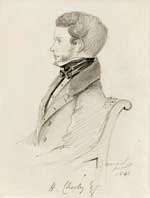
CriticsChorley, Henry F. (1808 - 1872)
Davison, James W.
Ryan, Desmond
Examiners of PlaysPrior to 1843, all new operas and plays at Drury Lane, Covent Garden, the Haymarket, the King's Theatre and all provincial Royal theatres had to be licenced by the Examiner of Plays. After 1843, all new operas and plays at any theatre were supposed to be licenced by the Examiner. Four Examiners were active during the period of English Romantic Opera: 1824 - 1836: George Colman (1762 - 1836) Colman was well known in the theatrical world. He had been a writer of popular plays as well as a manager. On John Larpent's death in 1824 he was made Examiner and proved to be a rather pernickety and tiresome one. As well as being suspicious of any political intent, he had a rather eccentric approach to anything he thought might disparage God or religion or be deemed immoral. Thus a phrase like "My angel" would be crossed out. More information on him can be found on a British Library blog. There is a book on Colman by Jeremy F. Bagster, George Colman, the Younger. (New York: King's Crown Press, 1946) 1836 - 1840: Charles Kemble (1775–1854) Best known as an actor and theatre manager, he took over the role of Examiner on Colman's death in 1836. He only held it for 4 years before resigning in favor of his son, John Mitchell Kemble. There is a biography on him in Sidney Lee (ed), Dictionary of National Biography, volume 30, 1892, pp. 365-367. This speaks (p. 367) of him performing the duties by proxy, presumably meaning that someone else read and adjudicated on the plays and operas to which Kemble then gave his agreement. 1840 - 1857: John Mitchell Kemble (1807 - 1857) Kemble is best known as a philologist and historian but he was also appointed as Examiner in succession to his father. Kemble went abroad in 1849 leaving William Bodham Donne as his deputy. He returned to London in 1855 and took up the role again until his death. Some letters between Donne and Kemble can be found in Catharine Bodham Johnson, William Bodham Donne and His Friends. (London: Methuen & Co., 1905). The book is available at can be found at Internet Archive. There is an extensive biography on him in Sidney Lee (ed), Dictionary of National Biography, volume 30, 1892, pp. 369-371. 1857 - 1874: William Bodham Donne (1807 - 1882) Donne had, in fact, acted as Kemble's deputy from 1849 when Kemble went abroad. Kemble again took up the post on his return in 1855 until his death in 1857, when Donne was appointed. More information on him can be found on a British Library blog, There is a book by his granddaughter, Catharine Bodham Johnson, William Bodham Donne and His Friends. (London: Methuen & Co., 1905) can be found at Internet Archive. It is essentially a collection of his letters. There is an article by James F. Stottlar, A Victorian Stage Censor: The Theory and Practice of William Bodham Donne in Victorian Studies. Vol. 13, No. 3 (Mar., 1970), pp. 253-282. A thesis on him, Dramatic Anxieties: William Bodham Donne, Censorship and the Victorian Theatre, 1849-1874, by Robert Bell at McMaster University, 2005, can be found at https://macsphere.mcmaster.ca/handle/11375/16245
Scene PaintersThere was only one aspect of English opera that came in for consistent praise: the staging. At the heart of this was the scene painting executed by a number of talented artists. The Grieve Family
|


 |
 |
 |
  |
|
|