  |
 |

|
  Singers (T)
This section also includes people who were primarily actors but fulfilled either non singing roles, which were sometimes included in English opera of this era, or in roles that did not make great demands on vocal ability. A few have been included because they were namesakes or relatives of English opera performers and so, hopefully, help avoid any confusion that might arise. Kurt Gänzl, Victorian Vocalists, (Abingdon, UK: Routledge, 2017) describes the lives and careers of around 100 Victorian singers from different countries and backgrounds but all of whom have some connection through singing Italian or English opera in London. The singers covered are listed here. Please see the section on the main Singers page for provisos about the material included here. Please email englishromanticopera@gmail.com with any comments and suggestions about errors or further material.
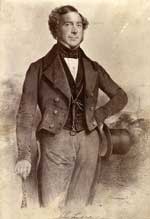
Templeton, John (1802-1886)
"Reminiscences of Grand Opera". He featured in the premieres of Benedict's The Gipsy's Warning (1838) and Balfe's Diadeste (1838) and created the leading tenor roles in several English versions of continental operas. He retired in 1852.
Terrot, MrTerrot joined Pyne and Harrison at Drury Lane during the last three months of 1858. He then moved with them to Covent Garden and was in the premiere of Balfe's Satanella (1858). He was retained for the following provincial tour and for the 1869-1860 season [1] and its provincial tour [2]. He then joined E.T. Smith's new enterprise at Her Majesty's Theatre for a season but by autumn 1861 he was playing provincial theatres. He returned to London at the end of 1864 to be part of Harrison's successor company to the Pyne and Harrison Company at Covent Garden. By 1866 was at the Olympic followed by further London and provincial theatres. His career seemed to have finished by the early 1870s. [1] According to the company list in The Examiner (Sep. 17, 1859). [2] It was drawn from the Pyne and Harrison company but neither of them took part. Annie Thirlwall was prima donna (Huddersfield Chronicle, Jun. 30, 1860) .
Thillon, Anna Mme
Thirlwall, Annie (1830-1881)Thirlwall was born in Hull, the daughter of John Wade Thirlwall a player in the Royal Italian Opera Orchestra [1]. Her earliest public appearance was at a concert in London on July 5, 1849 [2] but there was then little sign of her until 1852 when she seems to have begun concert work in earnest both in London and in the provinces, singing with most of the major singers of the time. The Sun (June 5, 1852) talked of her "brilliant and rich contralto voice of great power and volume" but she later took on soprano roles. Her first stage appearances were probably at Covent Garden in February, 1856[3] and she continued both opera and concerts for many years. In 1858, she began to call her self Annie Thirlwall to distinguish herself from her sister Ellen (Emily Fanny), an actress and singer. The same year she joined the Pyne and Harrison company and stayed with them until their demise in 1864, singing in the premiere of Mellon's Victorine (1859). She then joined the follow on company at Covent Garden, the Royal English Opera Company, but left them in 1865 and started her own company, the Grand English Opera Company, managing it often in tandem with Henry Corri. She continued singing with the company, although not always managing it, until early 1869 when she gave up touring and based herself mainly in London singing in concerts but also a variety of other entertainments including pantomime. In 1876, on the death of her father, she lost her voice to such an extent that she retired. In 1862, she had married Eugene Dussek Corri, one of the musical Corri family but who often used the stage name Dussek. He died in 1870. [1] Ancestry.com, The Era (Oct. 22, 1881) obituary [2] Morning Chronicle (Jul. 5, 1849) [3] Daily Telegraph (Feb. 23, 1856). At around the same time her sister Ellen, made her debut at the Strand.
Thomas, MrNo information has been found about Mr Thomas other than that he had a small part in the premiere of Loder's Raymond and Agnes in Manchester on August 15, 1855.
Thompson, MrAs might be expected given the name, there are a number of Thompsons active in the 18th and 19th centuries' theatre. The one who sang in de Pinna's The Rose of the Alhambra (1836) and Rodwell's The Sexton of Cologne (1836) at Covent Garden was probably the Mr Thomson who appeared fairly regularly at Drury Lane from 1820 through until 1833. In late 1835 he was at the Royal Pavilion and by 1836, at Covent Garden. He also sang at the Surrey, the Haymarket, as well as provincial theatres, such a Bath, during this time. In 1837, he was back at the Royal Pavilion.
Thompson, MrA Mr Thompson appeared in the premiere of Edward Fitzwilliam's The Queen of a Day at the Haymarket in 1851. He may have been the same Thompson as above.
Tonnelier (Tonnellier), Madame - See Ann Milner
Toulmin, Edward Oliver (1826 - 188? )[1]Toulmin's father, Oliver Toulmin, was a Professor of Music who organised concerts in which Toulmin played the piano, while another son played the harp. At some point, Toulmin switched to singing and appeared at Drury Lane in Balfe's The Sicilian Bride in 1852. The Standard (Mar. 8, 1852) referred to him as a new bass singer who but "scarcely rose above the mediocre level of the veteran S. Jones". After a couple of months at Drury Lane, he does not seem to have appeared again on the operatic stage and probably took up teaching, as the 1851 and 1861 censuses listed him as Professor of Music. There are a few mentions of him organising and appearing in concerts in the 1850s and early 1860s. His later years were overshadowed by drunkenness, imprisonment and confinement to an asylum [2]. The 1881 census showed him in the Channel Islands with his family although Jersey General Hospital records listed him as a patient the following year. [1] The 1841 census listed him as 15. Geneanet has a birth year of 1822 [2]The Essex Chronicle (Mar. 19 and May 7, 1869) reported his drunken threats to his family and others and his eventual imprisonment and the 1871 census showed that he had been committed to a lunatic asylum. However, his stay must have been short as the Chichester Express (Apr. 2, 1872) reported an E.O. Toulmin accompanying a concert in Portslade.
Travers, T. R. see Thomas Romer
Turpin, Maria - Mrs Henry Wallack (1807 - 1860)Turpin was born in Liverpool to theatrical parents on June 18, 1807. The start of her career in 1830 at the Haymarket did not meet with unanimous approval [1] but she continued there for some years as well as taking some provincial engagements. Her notices became more positive by 1835 when she was at Covent Garden [2], where she sang in the premiere of Rodwell's The Sexton of Cologne (1836). That year she married the actor Henry Wallack, brother of James Wallack the leading New York theatre manager of his day. She went with Henry to the US where she first appeared in June 1837 at the Arch Street Theatre, Philadelphia [3] and then appeared with him at various US theatres over the next three years. In 1840 and early 1841 she was also advertised as one of the instructors in the Music department of Davidge's Academy for Young Ladies in Baltimore. By late 1841, she was back at Drury Lane and resumed her British career there until moving to Covent Garden in 1843. In 1844, she and her husband were at the Norwich Theatre [4] and she continued to live and work in the Norfolk area for several years being still there at the 1851 census, in which she described herself as Professor of Music and Singing. At some point during that time she separated from her husband and never returned to the US. A concert in 1855 in Manchester referred to her resuming her profession and in 1858 she was reported as singing at the Canterbury Hall, often considered the first purpose built music hall, under the name of Mrs Anderson [5]. She continued to sing there up until her death in July 1860. Baron Wilson's verdict [6] was that "had her power been equal to her science, she would doubtless have proved a first-rate English singer". She also composed some songs. [1] For example, various reviews in The Tatler (September, 1830) and Edinburgh Literary Journal (Mar. 26, 1831), p.298. On the other hand, the Morning Post (Jun.23, 1830) was more encouraging. [2] The Court Journal (Oct.17, 1835), p.696. [3] T. Allston Brown, History of the American stage. (New York: Dick and Fitzgerald, 1870), p. 375. However, in his A History of the New York Stage, Vol. 1 (New York: Dodd, Mead and Company, 1903), p.244, he claims her first appearance in America was on September 4, 1837 in New York. The National Gazette (Jun. 15, 1837) supports the former. Perhaps Brown meant her first appearance in New York. [4] Norfolk Chronicle (Jan 13, 1844). The New York Herald (Feb. 24, 1847) reported her as primadonna at Norwich. She also gave concerts such as that at King's Lynn (Musical World, Mar. 3, 1848, p. 155). James Wallack had been a member of the Norwich company at one point. [5] Brighton Gazette (May 13, 1858) [6] Mrs. C. Baron Wilson, Our Actresses, vol. 2 ( London: Smith, Elder and Co., 1844), p. 308. |
 |
 |
 |
  |
|
|