  |
 |

|
  Singers (M)
This section also includes people who were primarily actors but fulfilled either non singing roles, which were sometimes included in English opera of this era, or in roles that did not make great demands on vocal ability. A few have been included because they were namesakes or relatives of English opera performers and so, hopefully, help avoid any confusion that might arise. Kurt Gänzl, Victorian Vocalists, (Abingdon, UK: Routledge, 2017) describes the lives and careers of around 100 Victorian singers from different countries and backgrounds but all of whom have some connection through singing Italian or English opera in London. The singers covered are listed here. Please see the section on the main Singers page for provisos about the material included here. Please email englishromanticopera@gmail.com with any comments and suggestions about errors or further material.
Macfarren, Natalia (Clarina Thalia Andrae) (1826 -1916)
She composed some songs and wrote the text for others as well as a teaching manual on singing and a libretto for a children's operetta, composed by her granddaughter, Natalia Davenport.[3] The Guardian (Apr. 15, 1916) had a short obituary that talked of "her rich contralto voice".[4] However, when the opera was revived in 1851, the Morning Chronicle (Nov. 18, 1851) complained that her voice was "meagre and weak, producing little effect in the solo parts, and utterly lost in concerted music". Judging by the criticisms of her initial appearance in King Charles the Second , possibly she was not at ease on the stage and failed to do herself justice. [1] Katy Hamilton, "Natalia Macfarren and the English German Lied", in Natasha Loges and Laura Tunbridge, German Song Onstage: Lieder Performance in the Nineteenth and Early Twentieth Centuries (Bloomington, Indiana: Indiana University Press, 2020), p.88. [2] Lawrence Gilman, Edward Macdowell (London: John Lane, The Bodley Head, 1909), p.24. She was instrumental in rejecting the composer, Edward Macdowell, for a post at the R.A.M. because he had studied with “that dreadful man Liszt”. [3] Natalia Davenport, Bringing in the May. (London: E. Ashdown,1902). Copy in the Bodleian Library [4] Her birth year is wrongly given as 1827.
M'Ian, Robert Ronald (1803 - 1856)Comic actor often playing Scottish roles. In 1839, he retired from the stage and concentrated on painting, particularly Scottish historical scenes. He appeared in Thomson's Hermann (1834), Loder's The Covenanters (1835) and the revival of de Pinna's The Rose of the Alhambra (1836) at the English Opera House. In 1838, he appeared in Benedict's The Gipsy's Warning at Drury Lane.
McMahon, MrMcMahon seems to have been initially based in Bath and then in Birmingham. His first London mention is at the Royal Grecian Saloon in the summer of 1842 [1] but he probably then went back to the provinces as the Manchester Times (Apr. 1, 1843) noted "the fine voice and correct style of Mr McMahon". He did not reappear in London until the summer opera season at the Surrey in 1845. Again he then went back to the provinces. The Manchester Courier (Oct.25, 1845) wrote that "Mr McMahon we were glad to welcome back again; he has a fine organ, and is of the right school". In summer 1847, he was again part of the opera season at the Surrey where he sang in the premiere of Tully's The Forest Maiden and the Moorish Prince. He was not retained for Bunn's season there later in the year [2] but went touring with the Kings to Newcastle and Hull. Given that he had the same surname as Anne McMahon, Donald King's wife, he was presumably a relative, possibly her brother. He was then back at the Surrey in early 1848 for Daughter of the Regiment and Maritana with Donald King but there seems to be no mention of him after that. [1] The Era (July 3, 1842) described him as from the Theatre Royal, Birmingham [2] The Sun (September 25, 1847) does not include him in its list of Bunn's company.
Maitland, MrSinger and actor. He often performed at the Surrey Theatre from 1831 until, at least, 1837, where he was part of the premiere of Rodwell's Lord of the Isles (1834). In 1835 he had a season at the Lyceum when he was in Loder's The Covenanters. After 1837, there is little trace of him although a Mr Maitland was shown managing a hall in Manchester in the mid 1840's and theatres in Northern Ireland late in the 1840s.
Malibran, Madame - Maria Malibran (1808-1836)
Manley, Henry (1819?-1891)There were several Manleys in the theatre profession and it is sometimes confusing as to who is referred to. John and Henry were brothers but it is not clear who was taken to be the elder[1]. There was another John Manley, based mainly in Dublin as actor and stage manager, and a Mr Barham Manley, singer and actor. A Mr Manley from the Theatre Royal Bath made his first appearance at the Royal Grecian Saloon in London on April 13, 1846[2]. On his benefit on December 17, he claimed to have been at the Theatres Royal in Manchester, Birmingham and Brighton[3]. A Mr Manley was at the Olympic in November, 1851, musical director of the Theatre de Varietes in Leicester Square at the beginning of May 1852 and at the Strand Theatre by the end of May. Although John was the elder Manley, which would identify him by the usual convention as the Mr Manley appearing from 1846 until 1852, for some reason he seemed to have acted as if he were younger than Henry. Henry was the better singer and the more go ahead having established a London career before John had even launched his in Dublin, thus it is likely that Henry was this earlier Mr Manley. It was only in December 1852 that a Mr Henry Manley was specifically identified, when Rebecca Isaacs took the Strand theatre for a short operatic season. In the Era (Nov. 2, 1856), he claimed to have been the principal tenor of Corri's English Opera Company and to be leaving it but by the time of their visit to Bradford in June 1857 he had rejoined [4]. He stayed with them until early 1858 when he set up his own company with F.W. Bridgman. He continued with his company until autumn 1859. In spring 1860 he joined Marian Pyne's English Opera Company but soon he and Hamilton Braham took it over and stayed with it until 1862 when it was announced that his "indisposition is of such a nature as to preclude him, for the present time, following his profession"[5]. Appearances were few until May, 1863, when he again put together another short-lived company. Similar efforts followed in 1865 and 1868-1869, otherwise he was with other companies or doing concerts. The Era (Apr. 6, 1879) announced his availability but no further engagements have been found. [1] The obituary in the Era (Feb. 7, 1891) gave Henry's age as 72, i.e. a birth date of around 1819. The registry of deaths had his age as 71. The 1861 census claimed that Henry was 34, i.e. born around 1827 but the 1871 census has 51, i.e. born 1819/1819. His brother John, according to his census returns was born in 1821/1822 but in fact according to his record on Ancestry.com he was baptised on September 13, 1815. Thus although John was the elder he appeared to identify himself as younger. Although John and their sisters Amelia and Susannah were baptised at St Martin's in the Field, there is no trace of Henry's baptism. His mother died in 1819 and one has to wonder whether that was in giving birth to Henry or shortly after, which might explain the lack of a baptism. Ancestry trees on Ancestry.com gives his birth year as 1816 but without any evidence. [2] The Era (April 5, 1846) [3] Lloyd's Weekly Newspaper (Dec. 13, 1846). The Era (Jan. 11, 1846) noted a Mr Manley at Newcastle [4] ]https://kurtofgerolstein.blogspot.com/2019/01/blog-post.html . [5] Berrow's Worcester Journal (Jan 4, 1862)
Manley, Jane - Mrs Henry Manley - Jane Munn (1829?-1874) [1]The Era (Jan. 18, 1874) in its obituary spoke of her as "an excellent singer and actress and an accomplished pianoforte player". She usually took secondo roles most often with the husband's companies. [1] According to ancestry.com, on her marriage in July, 1849, she claimed to be a widow and of "full" age, so possibly the birth details given in The Era are incorrect. However, the 1861 census has Jane Manley, "operatic performer" aged 32 but the 1871 census has her 39. Baptism records have a Jane Munn baptised on July 3, 1829 in Worcester.
Manley, John W (1815 - ?) [1]October 17, 1853, was advertised as John Manley's first appearance in Dublin, where he stayed for a few years, "his voice possesses much sweetness, but lacks power, although managed with great taste and judgment"[2]. He sang in the premiere of Lanza's Hamet and Zelena in Dublin in February, 1855. In 1856, he came back to England and sang with Henry Corri's company, then with Marian Taylor's short-lived company [3] before going to Galer's company in spring 1858. By June 1858, in Salisbury, he was part of the Metropolitan English Opera Company that was managed by Henry Manley and by F.W. Bridgman. He continued to sing for many years in a wide variety of companies with a last mention in 1884 as part of Charles Durand's Grand English Opera Company [4]. He sometimes doubled as acting or stage manager [5]. In 1871 and 1877, he briefly had his own company probably just to fill in gaps in his main itinerary. [1] The confusion over the Manley's order of precedence and John's birth date are described under Henry Manley's entry. The date of John's death is also confused. The marriage certificate of his son, William, dated November 14, 1871, stated that his father John Manley, Professor of Music, was dead. However, according to the Stratford upon Avon Herald (Jan. 5, 1872), a Mr. J Manley (second tenor) was appearing there. While there was at least one other J.Manley in the theatre world at this time - Mr J.H. Manley supporting his precocious son Master John Manley - he did not sing in opera. If there was a concurrent but different tenor Mr. J. Manley it would be a very odd coincidence. Possibly, Manley had been marked deceased in error as the father of the bride was also deceased. [2] Freeman's Journal (Oct 13, 1853), The Era (Oct 23, 1853). To show the difficulties sorting out the Manleys, the previous month a Mr J Manley, stage manager, had just left Dublin for Bristol after a stay of six years (Freeman's Journal, Sep. 6, 1853). He returned to Dublin and died there in April 1855 [3] Henry Corri was a member and the manager up to that point so one has to suspect that it was a way of getting round Corri's business difficulties. [4] The Era (Apr. 26, 1884) [5] The Era ( Oct. 2, 1864)
Manvers, Mr Charles - Charles Ward Marshall (1808 - 1874)Manvers was a tenor. He was born in Oxford with the name Charles Marshall but changed it so that his theatrical reputation would not affect the prospects of his brother who was organist at Christchurch, Oxford [1]. He was said to be from the Liverpool Theatre but the first mention of him appears to be at the Reading Theatre in May 1834. He made his first appearance at Covent Garden in October 1835 [2] and performed there for about three years. The Odd Fellow (Feb. 2, 1838) in its assessment of the 1838-1839 Covent Garden company wrote that "Mr Manvers is an excellent vocalist. His voice is of a rich quality, and in simple ballads there is no male singer upon the stage that comes up to him".
He sang in the premieres of Rodwell's The Sexton of Cologne (1836) and Rooke's Amilie (1837) and Henrique (1839). Later that year, Edmund Simpson of the Park Theatre New York hired him as part of a new English opera company [3]. Manvers stayed in the US until late 1842 [4]. He then performed in opera both in London and the provinces as well as much concert work. Him and his wife were listed as passengers on the Victoria from London to New York in September 1847 [5]. At some point he joined the Seguin touring company but he left in 1850 and formed his own troupe [6]. By 1852 he was back at Drury Lane. He sang in the premiere of Smart's Berta or The Gnome of the Hartzberg in 1855 at the Haymarket. From 1856 to 1858, he was part of the Royal National English Opera Company that toured Britain and Ireland very extensively. By 1860 he no longer seemed to be performing, his career cut short by chronic asthma. In both the 1856 London Directory and the 1871 census, he described himself as Professor of Music, so presumably took pupils. He also composed some songs. The Sunday Times obituary said of him "Had he been a better actor than he was, he might have taken a more prominent position, for he was a good musician, and had a sympathetic if not powerful organ". [1] Obituaries in Sunday Times (Mar. 1, 1874) and Western Daily Mercury (Mar. 13, 1874) [2] Morning Chronicle (Oct. 28, 1835) [2] Katherine K. Preston, Opera on the Road (Urbana and Chicago: University of Illinois Press, 1993), p.40 [4] Sunday Times (Oct 30, 1842) - Hanover Hall concert advertising it as his first appearance since America [5] Charleston Daily Courier (Sep. 21, 1847) [6] Preston, Op. Cit., p.366, footnote 8, says that it gave its first performance on July 29, 1850.
Mark, MrA Mr Mark was reported as having gone down well in Montrose (The Era, Feb. 20, 1848). Possibly he was the Mr Mark who appeared in Laurent's Quentin Durward in December, 1848 at Covent Garden.
Marshall, Miss - Mary "Polly" Marshall (1824 (?) -1878)
She joined the Princess's Theatre in mid 1844 and stayed for three years appearing with her sister, Louise, in the premiere of Loder's The Night Dancers on October 28, 1846. She then performed at various London theatres before leaving for the US in 1856 where she had a six year stint. On returning to the UK she appeared at the Strand Theatre in November 1862. She probably retired in the 1860s but the appearance of a different Polly Marshall obscures matters [2]. There was also a Miss M Marshall who sang in concerts in the early 1840s. [1] The obituary in The Era (Nov. 24, 1878) said that she appeared at the age of ten in Davy Jones's Locker at Drury Lane in 1830. Bell's Life in London (Dec. 19 1830) has a Miss Marshall in Morton's A King's Fireside at Drury Lane in December 1830. It claimed she was a child of five so it might possibly have been Louisa but Mary seems to have been the more precocious and was only a year or two older. Child's ages were notoriously flexible for stage purposes. [2] The Era obituary said that her last 20 years was "passed in comparative retirement" but 20 years previously she was still in the U.S.
Marshall, Louisa (1827(?) - 1896)Louisa was Polly Marshall's younger sister. The Weekly Dispatch (June 20, 1841) announced that her song at Sadler's Wells on June 22, 1841, would be her first appearance in public. A long career in the theatre of nearly 40 years followed, essentially as a comic actress and, in the early years, often with her sister, Polly. She appeared with her at the Princess's in the premiere of Loder's The Night Dancers on October 28, 1846. A page on the Marshall family can be found at https://london-overlooked.com/marshall/
Martin, MrsMartin appeared in Balfe's Satanella at Covent Garden in 1858. Technically, the well known actress Helen Faucit was also a Mrs Martin by this time but it would hardly have been her and she continued to use her maiden name..
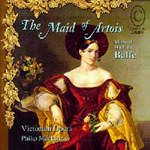
Mathews, Mr T. - Tom Mathews (1805 - 1889)? [1]Mathews was described as "the last of the Grimaldi school of clowns"[2], although he also took more dramatic roles. His first London appearance was probably at Sadler's Wells in early 1831. Stints there and at the Olympic interrupted with a short spell at Covent Garden for the pantomime in 1833. He was then at the English Opera House (Lyceum) in 1835 and then at Drury Lane where he appeared in the premiere of Balfe's The Maid of Artois. He then went to various London theatres, in particular he was at Drury Lane for the premiere of Balfe's The Enchantress (1845), Forbes The Fairy Oak (1845), Benedict's The Crusaders (1846) and the revival of The Maid of Artois in 1846. In 1848, he toured various venues in the UK including Bristol, Bath and Liverpool. By 1850 he was back at the Olympic as Clown for at least a couple of seasons. He was still working in 1857 at the Lyceum. In 1885, he was living in Brighton. [1] A John Thomas Matthews died in Brighton in 1889 aged 83. Brighton was his last known residence in 1885 when he was said to be 80 years old, Western Daily Press (Oct. 31, 1885).
Matthews, Mrs F.- Mrs. Frank Matthews - Amelia Upjohn (1813? - 1873)[1]A well known burlesque actress who had a long career on the stage of around four decades beginning at the Adelphi in 1829. She was at the English Opera House (Lyceum) in July 1836 for the revival of de Pinna's The Rose of the Alhambra (1836). She performed at most of the London theatres as well as managing the St James's in 1862 [1] In the 1841 census she had an estimated birth date of 1811, in the 1851 of 1809 but in the 1861 and 1871 censuses it was 1813. Her obituary in the Sunday Times (Sep. 7, 1873) claimed her age was 66, which would imply a birth date of 1807.
Mayoss, Miss - Susanna Elizabeth Mayoss (1817? - 1856)Mayoss's birth date comes from her claiming her age to be 34 in the 1851 census, but, as she seems to have made her debut at the theatre in Norwich in February 1829, this might have been incorrect. She then spent five years touring the provinces, before arriving in London at the Royal Victoria in May 1834 and later, after a break in Windsor, moving onto the Surrey, where she appeared in Rodwell's Lord of the Isles (1834). She then toured the provinces again until playing the Adelphi in 1836. Again it was back to the provinces before an engagement at the Royal Marylebone Theatre in December 1838. She then seems to have only played in the provinces and was playing in Windsor on February 14, 1842, about 3 months before the birth of her daughter, Fanny [1]. She had married Robert Romer, a comic actor and brother of Emma Romer, in 1840. She does not seem to have acted again after the birth and was shown on the 1851 census as a milliner. [1]Ancestry tree for Robert Romer
Mears, Mr - Charles MearsMears was at the English Opera House (Lyceum) 1817-1819 and then onto Covent Garden in 1820 where he performed for several years. He also appeared at Drury Lane, at Vauxhall Gardens and in concerts in the provinces, e.g. Norwich in 1831 and Herne Bay, 1833. In the latter cases, he was described as "of Covent Garden". He was at Drury Lane for Balfe's The Maid of Artois (1836), Balfe's Joan of Arc (1837) and Benedict's The Gipsy's Warning (1838). By 1841, he was at the Adelphi but there is no obvious sign of him after that.
Melton, MissAccording to Allston Brown [1], she was the sister of Charles Melton Walcot, comic writer and actor. Thus she seems to have used "Melton", a family name, as her stage name. She was a pupil of the bass singer Carlo Rovedino and probably made her first public appearance at one of his concerts in the Argyll Rooms on May 13, 1828 [2]. According to the Norfolk Chronicle (Feb. 28, 1829), she first appeared at the theatre in Norwich on February 25, 1829 and this may well have been her stage debut. In the June she moved on to the Haymarket in London, then to Dublin in 1831 and 1832 and then two years touring the provinces before becoming part of John Braham's St James's troupe in 1835, which was wrongly billed as her London debut. There he appeared in the premiere of á Beckett's Agnes Sorel (1835). In 1837, she toured the US as part of the Keeley's company and then stayed there for many years, being joined after a few years by her brother, Charles. According to Allston Brown[2], she married and retired in the early 1840s and by 1861 was living in Ireland. In fact, she continued to perform in the U.S. and returned to London and the St James's in 1845. By 1847 she was back in New York and advertising for students under her married name of Mrs McKenna. However, she did not completely leave the stage as the Sunday Dispatch (Apr. 4, 1852) wrote that she was "a truly valuable acquisition" to the company at Niblo's in New York but it looks like it might just have been for the season. There seems little news of her after this time so perhaps that was when she retired to Ireland. [1] T. Allston Brown, History of the American stage. (New York: Dick and Fitzgerald, 1870), p.243. [2] Morning Post (May 15, 1828)
Mengis, Joseph-Aimé (1816-1881)
premiere of Wallace's Lurline (1960). In early October 1860, he sang briefly at the Pavilion Theatre, also known as the Eastern Opera House. However, the East London Observer (Oct. 20, 1860) was very dismissive, "his voice is wretched" and his pronunciation " decidedly grotesque". "The success of a beautiful opera ... was prevented by his unfortunate inability". Perhaps this fiasco forced him to retire for there do not seem to be any more references before he left for Switzerland in 1861. In September 1867, he married a widow, Rebecca Simpson, in Bern in Switzerland [1]. Kurt Gänzl, Victorian Vocalists, (Abingdon, UK: Routledge, 2017), pp. 387-393, has a chapter on him. [1] Essex Chronicle(Sept. 13, 1867). Simpson, a widow, was from Grays in Essex.
Messent, Sophia Harriet (1823-1903)Messent (or Messant) was born in London and studied at the Royal Academy. She joined Bunn's company at Drury Lane for the 1846-1847 season and stayed when Jullien took it over for the 1847-1848 season. She then sang in Bunn's 1848-1849 season at Covent Garden, but, after a short stint with Donald and Anne King in Bath and Bristol in early 1849, she devoted herself to concerts. She sang comparatively little English opera but mainly continental operas in Italian and English. She took over from Emma Romer for a few performances in Balfe's The Bondsman in early 1847 when Romer fell ill and was Princess Joan in Henri Laurent's short lived Quentin Durward at Covent Garden in December, 1848. Kurt Gänzl, Victorian Vocalists, (Abingdon, UK: Routledge, 2017), pp. 394-403, has a chapter on her. Kurt also included much of that material a Kurt of Gerolstein blog, "Little Treasures of Musical History" .
Millar, MrMillar appeared in the premiere of Meyer Lutz's Zaida or the Pearl of Granada at the Royal Amphitheatre, Liverpool, in February, 1859. Although he did not appear in other operas in Galer's Liverpool visit, a Miss Millar did. She was also listed when Galer's company went on to Sheffield but neither was mentioned when they finished the tour in Leicester. He was probably a member of Galer's chorus, whose names would not ordinarily be included.
Miller, MrGiven that the name was very common and that Miller was in all probability just a bit part actor, nothing has been found about him other than that he appeared in the premiere of Balfe's The Enchantress at Drury Lane in May 1845 and in its revival in September 1845
Milner, Ann - Madame Tonnelier / Tonnellier (1835-1901)
[1] Cooper's obituary, Glasgow Times (Jan. 27, 1881), referred to Tonnellier as his wife, although his actual wife was still living. Tonnelier is the French term for a cooper. [2] Katherine K. Preston, Opera on the Road: Traveling Opera Troupes in the United States, 1825-60. (Urbana and Chicago: University of Illinois Press,1993), p.248. [3] Leeds Mercury (Jan. 3, 1882). According to her obituary in the Huddersfield Daily Examiner (Mar. 4, 1901), Carl Rosa tried, unsuccessfully, to tempt her out of retirement.
Minton, MrThere is more than one Minton around this time. It is possible that this was the Mr Minton who acted at the Haymarket in 1797 or the one at the Haymarket in 1805[1]. Looking closer to 1834, when a Mr Minton performed in the premiere of Loder's Nourjahad, one can track a Mr Minton through from the Adelphi in 1820 then at the English Opera House (Lyceum) in 1821. A Mr Minton then stayed with the English Opera House including on its move to the Adelphi in 1831 and then back to the Lyceum in 1834. He was there until early 1836 but no sign of him after that. [1] Philip H. Highfill et al., A Biographical Dictionary of Actors, Actresses... . Vol 10 (Carbondale and Edwardsville: Southern Illinois University Press, 1984), p. 268.
Miran, Mira (Mira Dashwood Wilmhurst) (1826-1884)Miran came from a theatrical family, her sister Laura becoming a well known actress under the name of Laura Addison. Miran entered the Royal Academy of Music in 1843 taking part in a concert there on July 8, when the Morning Post (July 10, 1843) singled her out as "a most promising pupil, possessing, as she does, a contralto of the richest quality". Her first professional engagement was with Jullien's short lived company at Drury Lane in 1847-1848, when she sang in several operas including the premiere of Balfe's The Maid of Honor (1847) where she again garnered much praise. The Era (Dec. 26, 1847) wrote that She possesses a pure contralto voice, fine in tone and powerful, although, as yet, somewhat limited in compass. She is tall and graceful in appearance, excessively pretty, and shows much comic talent, her singing and acting evincing great espieglerie (playfulness) of manner. After the collapse Jullien's various enterprises, she did some concert work but in 1849 went off to Italy. After a brief return to Britain in 1850, she again went to Italy and appeared in several operas there. She then seems to have given up her career and by 1861 was in Guernsey having set up there as a music teacher. She remained there until her death in 1884 during which time The Star (Oct. 26, 1876) reported on the successful performance of a Te Deum that she had composed. Kurt Gänzl, Victorian Vocalists, (Abingdon, UK: Routledge, 2017), pp.400 - 403, has a chapter on Miran, from which much of the above has been produced.
Moelder, Mr (Herr)Mr Moelder was in Balfe's The Devil's in it at the Surrey in July 1852. He was then advertised as part of a touring opera group with Madame Anna Caradori [1] that toured the provinces for five months at the end of 1853 and beginning of 1854[2]. There seems no sign of him after that so perhaps he left the country. [1] Not to be confused with Madame Caradori-Allan, who was no relation. [2] Kurt Gänzl, Victorian Vocalists, (Abingdon, UK: Routledge, 2017), p. 126. The Yorkshire Gazette (Oct. 8, 1853) advertised their two day stay in York singing Norma and Lucrezia Borgia. Herr Kuchler, another singer in the Balfe premiere, was also in the company and, in York conducted it.
Morgan, MrThere is little sign of theatrical Mr Morgans in the 1830s apart from an appearance in Romer's The Pacha's Bridal at the Lyceum in September 1836 and in a farce at Covent Garden in December of the same year. There was a Mr Morgan in charge of the chorus at the Adelphi in 1842. Mr Morgan was in the Drury Lane chorus from at least Balfe's The Bohemian Girl (1843) on and later took small parts in Balfe's The Enchantress (1845), Wallace's Maritana (1845), Benedict's The Crusaders (1846), Lavenu's Loretta (1846) and Balfe's The Sicilian Bride (1852), all at Drury Lane. Whether this was the same Mr Morgan throughout is difficult to gauge. One possibility is that, at least, the earlier Morgan might have been "the celebrated Irish singer" and sometime pub landlord [1]. His dates were 1792-1844 [2]. [1] Bell's Life of London (Mar. 8, 1835) [2] The Illustrated belle assemblée (September, 1844) p.127 - death notice
Morgan, J. MrJ. Morgan appeared alongside Mr Morgan in the Drury Lane chorus from Balfe's The Bohemian Girl (1843). He seems to have had a small part in Balfe's The Enchantress in May 1845 and Lavenu's Loretta in November 1846 at Drury Lane. Mr Morgan could well have been his father or older brother. I
Morley, MrA bass singer and pupil of Sir George Smart, he made his debut at Covent Garden in January 1830 and appeared there in Spohr's Zemire and Azor and his oratorio The Last Judgement in the following year. He performed at the Surrey Theatre for some years, where he was part of the premiere of Rodwell's Lord of the Isles (1834) and at the Royal Victoria. He appeared at Covent Garden in de Pinna's The Rose of the Alhambra (1836) and Rodwell's The Sexton of Cologne (1836). In 1838, he went to the U.S. to join Wallack's company in New York [1] but was back again for the pantomime at Drury Lane in November 1839 [2] and the following year was in Dublin before returning to London to appear in Frank Romer's Fridolin in late November, 1840. He returned to Dublin in the autumn of 1843 and then, by mid 1844, on to Liverpool, where he spent the 1844-1845 season. A Mr Morley appeared in Glasgow for the following season. He may have returned to the US for a time because in the autumn of 1846, he gave a series of concerts in Britain based on his travels there [3] or they might be based on his 1838 visit. By the 1850s there seemed to be several Morleys performing so it becomes difficult to know which, if any, was him. In the 1860s a Mr Morley sang operatic excerpts at various music halls. [1] Katherine K. Preston, Opera on the Road (Urbana and Chicago: University of Illinois Press, 1993), p.38 [2] Saunder's Newsletter, (Nov. 15, 1839) [3] Illustrated London News (Oct. 24, 1846). The Era (Oct. 18, 1846) referred to "a recent trip". The Era (Oct. 25, 1846) wrote that he had been in America for some years but that does not seem correct. It also said that he'd lost his savings when an American bank failed.
Morris, MrA Mr Morris appeared in the premiere of De Pinna's The Rose of the Alhambra in 1836 at Covent Garden but otherwise there seems no sign of him. There was a Mr Morris who was lessee of the Haymarket Theatre at this time but it seems unlikely it was him.
Mortimer, MrActor who appeared at the Coburg in 1824 and the Surrey in 1825. He then moved between those theatres for several years as well as spells at Sadler's Wells and the Olympic. There seems no evidence of him after 1835. He was in Rodwell's Lord of the Isles in 1835 at the Surrey.
Mortimer, MissThere were several theatrical Miss Mortimers in the 1850s; there was at least one actress, three singers, a dancer and a pianist. A Miss Mortimer made her first appearance at the Green Gate Saloon, London, in December 1855 [1]. She may well have been the singer who was part of Tully's National English Opera Company when they appeared in Paisley in December, 1857, and continued with them into 1858 including when the company was taken over by Lucy Escott [2]. In July 1858, she briefly joined Elliott Galer's London Grand Opera Company but moving on to Pyne and Harrison for their 1858-1859 season, where she appeared in the premiere of Balfe's Satanella. She does not seem to have been part of their 1859 provincial tour nor retained for the following season [3]. A Miss Mortimer was billed as principal soprano at the Winchester Music Hall in London in 1860 [4]. Shortly after a Miss Mortimer, part of an Australian comic duo began to be advertised but was, presumably, a different person as they were billed separately at Wilton's Music Hall in April 1862, the other Miss Mortimer being "a splendid soprano" [5]. A Miss Mortimer continued to appear for a few years in music halls and provincial theatres but it is not clear if it was the same person. [1] Reynolds's Newspaper (Dec. 23, 1855) [2] Paisley Herald (Dec. 12, 1857),The Era (Jan. 31, 1858), The Era (May 23, 1858) [3] According to the cast list for Newcastle (Daily Chronicle, Apr.20, 1859) and the company list in The Examiner (Sep. 17, 1859) [4] South London Chronicle (Mar. 24, 1860) [5] The Era (Apr. 20, 1862)
Murray, Miss (?- 1842)Murray was primarily an actress. Throughout the 1830's she performed at almost all the major London theatres with her longest engagement being at the Olympic. She was at the English Opera House (Lyceum) in 1836 where she appeared in the premiere of Romer's The Pacha's Bridal. She seems to have taken a break around 1840 because a Sunday Times (Aug. 15, 1841) report of an appearance in Ryde talked of her resuming her profession. By 1842 she was back in London at the Adelphi but died later that year, possibly from cholera[1]. In its 1838 review of the Olympic Theatre company, the Sunday Times (Feb. 11, 1838) said of her "Miss Murray is a lady whose fine person induced her to try the stage. She plays Frenchwomen better than any one on the boards, but though perhaps the best formed lady in the profession, and not one of the least accomplished, she can never take any exalted rank as an actress, even in vaudevilles". [1] Bell's New Weekly Messenger (Dec 25, 1842) . The Examiner (Dec 24, 1842), p. 830, reported that it was cholera. |
 Wikipedia
 |
 |
 |
  |
|
|