  |
 |

|
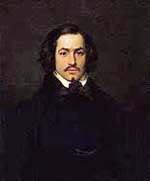
  John Barnett1802-1890
Barnett's Life and Work
Unfortunately, Barnett did not help his own cause by quarrelling with many of the people in London, such as Arnold and Bunn, who were in a position to help him [2]. His quarrel with Arnold had been about the lack of remuneration and the position versus spoken drama was stark. The Taunton Courier (Nov. 17, 1839) reported that Edward Lytton Bulwer (as he was then) received £700 for The Sea Captain and Sheridan Knowles £600 for Love independent of any money they might receive from publishers. This contrasted with the lack of any payment for any of Barnett's operas, notwithstanding their success. He did receive 100 guineas from W. Hawes for the publication rights to The Mountain Sylph [3] and was said to be going to receive £700 from a music publisher (presumably Cramer, Addison & Beal) for Fair Rosamond [4] Perhaps these grievances led him to try to launch an English opera house at the Prince's Theatre (the renamed St. James's) in 1840, but it quickly folded. Disenchantment with London may have led him, in 1841, to move to Cheltenham where he became a successful singing teacher as well as continuing to compose songs and instrumental works. He wrote a book on his methods, School for the Voice (1844). Barnett's daughter, Clara Kathleen Rogers, a singer, published two memoirs: Memories of a musical career (Plimpton Press, 1932) and The story of Two Lives (Plimpton Press, 1932), which include many references to John Barnett. His son, Eugene, wrote the music for a number of songs and comic works. A contemporary view of Barnett can be found at Actors by Daylight. Vol. 1 (London: J. Pattie, 1838-1839), pp. 292 - 293. It described him as "exceedingly diminutive, but his appearance is far from unprepossessing". [1] George A. Macfarren, "Barnett, John", in ed. John F. Waller, Dictionary of National Biography, Vol. 1. London: William Mackenzie, 1863, p.389. [2] The Argus (Dec. 12, 1842) recorded his quarrel with Joseph Mainzer, chorus master and itinerant chorus trainer, when the latter came to Cheltenham. His ideas of choral training were at odds with Barnett's approach and Bernett appeared to have tried to sabotage one of his classes. At one point Barnett was said to have written a note of "such an obscene nature that it was unfit for publication". [3] Clara Rogers, Memories of a Musical Career. (Norwood, Massachusetts: Plimpton Press, 1932). p.6 [4] Morning Post (Jan 27, 1837)
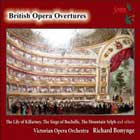
Recordings of Barnett's WorksBallads, opera excerpts and other works
Books and articles on BarnettGeorge Biddlecombe, English opera from 1834 to 1864 with particular reference to the works of Michael Balfe. (New York: Garland Publishing, 1994), pp. 77-85, has a chapter on him .
Scores and librettosSources of all the librettos can be found here. References to scores can be found on the relevant opera page. The autograph score of his unperformed Kathleen can be found at IMSLP.
Web pages on BarnettNone are known |
 |
 |
 |
  |
|
|