  |
 |

|
  Singers (L)
This section also includes people who were primarily actors but fulfilled either non singing roles, which were sometimes included in English opera of this era, or in roles that did not make great demands on vocal ability. A few have been included because they were namesakes or relatives of English opera performers and so, hopefully, help avoid any confusion that might arise. Kurt Gänzl, Victorian Vocalists, (Abingdon, UK: Routledge, 2017) describes the lives and careers of around 100 Victorian singers from different countries and backgrounds but all of whom have some connection through singing Italian or English opera in London. The singers covered are listed here. Please see the section on the main Singers page for provisos about the material included here. Please email englishromanticopera@gmail.com with any comments and suggestions about errors or further material.
Lambert, MrThe Bayswater Chronicle (May 27, 1865) said that the Mr Lambert, who sang in the premiere of George Allen's Castle Grim at the Victoria Hall, Bayswater, on May 23,1865, was an amateur. Thus there is little possibility of any further information. There were other Mr Lamberts, including one from Australia, but they were professional actors. There was a David Lambert a noted bass singer and thus, seemingly, the one most fitted for the part but it does not seem to have been him [1]. [1] David Lambert (1835-1873) was part of choirs, first at the Chapel Royal, Windsor and then at Durham Cathedral and regularly sang at concerts and oratorios. However, he was not an amateur. He never seems to have performed on the opera stage, either through inclination or because of scruples connected to his religious affiliations. Finally, he was singing in Liverpool the previous evening and, while returning by rail from Liverpool the following day was quite feasible, it is not obvious whether the service would have been sufficiently reliable to risk taking a booking the same evening.
Lancia, Florence (Laura Florence Ladbroke Clarke) (1840-1905)
premiere of John Mallandaine's operetta, Sylvia, at the New Royalty in February, 1866. She did some teaching [4] and composed a few minor works. Kurt Gänzl, Victorian Vocalists (London: Routledge, 2018) p.330-346 has a detailed chapter on her career. [1] Morning Post (Dec. 28, 1858), She was described as "Prima donna from the Teatro Regio, Turin". [2] The Times (Mar. 16, 1859) [3] For example at Hawkstone Hall in South London in January 1880 (Southwark Mercury, Jan. 17, 1880), at Lowestoft in September 1881 (The Norfolk News (Oct 1, 1881) and even as late as 1904 at Amesbury (Salisbury Journal, Jan. 9, 1904) [4] Miss Jeannie Malraison advertised herself as a pupil of Frank Mori and Lancia (The Norwood News, Sep. 11, 1875) . The Sketch (Nov. 10, 1897) in its short biography of Bertha Moore noted that she studied privately under Lancia.
Land, MissAppeared at the Haymarket in 1831 and later moved to the Surrey, where she appeared in Rodwell's Lord of the Isles, and Royal Victoria. By 1836 she was at Drury Lane and then Covent Garden where she appeared in the premiere of de Pinna's The Rose of the Alhambra (1836). By 1839, she was touring the provinces appearing in Manchester and Bristol. She also got married that year to Mr Garson[1] but continued to tour, though mainly concert work, into the 1850s and using her maiden name. [1] It was only in Bristol at the end of 1839 and beginning of 1840 that she appeared under the Garson name.
Lane, Miss B.[1]The first mention of Miss Lane seems to be at Drury Lane in April, 1828 and later at the Queen's Theatre. There is then no sign for a couple of years until a Miss Lane was listed at Sadler's Wells in November 1833 and later at the Adelphi as Columbine. She stayed at the Adelphi until the end of 1836 when she joined Covent Garden where she appeared in the premiere of De Pinna's The Rose of the Alhambra in May, 1836. A Miss Lane continued to appear at various theatres into the 1840s but it is not clear whether it was necessarily the same person. [1] The Observer (Jan. 11, 1836) named Miss B. Lane as acting at Covent Garden.
Lanza, Rosalia (1818-1905)Lanza's father was a well known composer and singing teacher. Lanza's early engagements were in concerts in London and the provinces often organised by her father, one of her earliest being with her father in Southampton in September, 1832, when she was around 14 years old.[1] Her early concerts billed her as a contralto.[2] but she later sang many soprano roles perhaps not always wisely as the review of her singing in Hamet and Zelena makes clear below. Her first stage appearance seems to have been in the premiere of Linley's Francesca Doria at the Princess's Theatre in 1849, where she sang as a soprano.[3] She only stayed the one season, after which, she toured the West Country with a company under Lewis Lavenu before a brief spell at the Surrey Theatre. Further tours included a revival of Macfarren's King Charles the Second in Manchester in October 1850. In 1851, she went to the Marylebone and then to the Lyceum with Lucy Vestris in 1852. These latter roles were more musical dramas, comedies etc rather than opera. She returned to the Theatre Royal, Dublin at the end of 1852 for around two years, where she became part of the stock company[4]. It was there that she sang in the premiere of her father's opera Hamet and Zelena in February 1855. She had sung in earlier manifestations of the opera in 1851 and 1853 in London. The Dublin Company did a tour in England in March and April, 1855, and she seems to have remained in England after that. She then appeared with various touring companies, including Elliott Galer's Grand English Opera Company that appeared at Drury Lane for several months in 1855, Henri Corri's, in which she was for once the prima donna, James Tully's, which included a spell at the Surrey in 1857, and Lucy Escott's, although she did not go to the US with them. She was billed as Directress of The Metropolitan English Opera (1858-1859), whose managers were Henry Manley and Frederick Bridgeman. She returned to London for the 1861-1862 season appearing at Drury Lane and the Standard Theatre but in more character roles than singing ones. She then devoted herself, primarily, to teaching; she had continued to teach throughout her career. In the 1881 census she described herself as describe "Teacher of Singing" but by the 1891 census she was retired, "living on own means". She also composed some songs and minor pieces. The Weekly Gazette (Feb. 10, 1855) wrote quite a full appraisal of her voice as part of its review of Lanza's Hamet and Zelena in Dublin in February 1855. Miss Lanza's vocalization is often extremely and painfully defective, in consequence of the efforts which she makes in straining her voice beyond its natural compass. In several instances, during the representation of Hamet and Zelena, there was a harshness in her upper notes which materially injured the effect of some of the concerted pieces. Want of flexibility, too, in some of those passages of fioriture, in rendering which flexibility is so essential, was very observable in Miss Lanza 's singing. It is evident that this lady has a fine dramatic conception of the manner in which the music of the lyric stage should be given, that she has studied in a good school, and that, were she possessed of the register of voice which is required for soprano parts, she would be a most effective and pleasing artist. But the organ is not capable of being used in effectually producing the tones which are required, and Miss Lanza is, in our judgment, never heard to advantage when singing in parts above the range of her voice. [1] Hampshire Advertiser (Sept. 15, 1832) [2] The Maidstone Journal (Oct. 30, 1832) talked of her "very deep contralto voice". [3] The Morning Post (Mar. 5, 1849) said that she "made a very creditable debut; her voice is a soprano of some extent but of little power" [4] R.M. Levey and J. O'Rorke, Annals of the Theatre Royal, Dublin (Dublin: Joseph Dollard, 1880), p.40. Freeman's Journal (Oct. 12, 1852)
Lascelles, Miss MThere were a number of singers called Lascelles in the 1860s. The best known was probably Annie Lascelles (born Sarah Annie Cobb). She married a Francesco Berger in 1864 and then was usually known as Madame Berger-Lascelles. There was a Julia (or Lillian) Lascelles from Australia and a Kate Lascelles who had careers in music hall. The Miss M Lascelles who sang in Galer and Reeves company at the New Royalty had a short career, at least under that name. In early 1865, she was with the British Operatic Association company, then at the New Royalty, where she sang in the premiere of Mallandaine's Sylvia or the Forest Flower in February 1866. On the demise of the company, she joined Thirlwall and Galer's company. Although there are no listings, given a Miss Lascelles appeared as part of Henry Haigh's company in July 1871 [1], she may well have been singing with other companies in the mean time. [1] The Era (July 2, 1871)
Latter, Richard (1823 - 1868)[1]Latter was born in Bromley, Kent. The first public mention that has been found is in a concert at Dartford on November 4, 1845.[2] Either then or shortly afterwards, he went to the Royal Academy of Music for he was advertised as a professor at the RAM in a concert in Birmingham on January 14, 1847.[3] A concert two years later in Bristol billed him as from the Princess's Theatre [4] but, in fact, his first appearance was advertised some months later on November 8, 1849.[5] He sang in the premieres of Schira's Mina in December 1849 and The Orphan of Geneva in April 1850, both at the Princess's Theatre. He only stayed there for one season and was not retained when Charles Kean took over in 1850. He was a bass. He continued to appear in provincial theatres and concerts for some years as well as teaching. He was based in Aberdeen for some ten years or more, appearing there on the 1861 and 1871 censuses. By the 1881 census, he had moved to London and, at some point, took up a professorship at the Guildhall School of Music where, in 1895, he was reported to be the highest paid professor at £818 per year.[6] [1] According to Ancestry.com records, he was born in Bromley, Kent, on July 22, 1823. On his various census returns he implied a different birthdate on each [2] Kentish Independent (Nov. 8, 1845) [3] Birmingham Journal (Jan. 2, 1847) . The professor title might have meant little more than that he studied there. [4] Bristol Mirror (Feb. 24, 1849). Presumably he had been hired for the 1849-1850 season at the Princess's, although he haad not actually appeared there by then. [5] The Morning Chronicle (Nov. 8, 1849) [6] Birmingham Gazette (Sept. 17, 1895). Given that he left £4376 in his will, this is entirely credible.
Lawler, MrLawler was a bass singer, a pupil of John Bianchi Taylor of Bath [1]. He sang in Bath from 1836 until 1840, though mainly or even solely in concerts. It seems that he must then have come to London where, in March 1840, he sang in the premiere of Balfe's Keolanthe. By the 1843-1844 season, he was singing at the Surrey including Alidoro in Rossini's Cinderella and a non singing part in Rodwell's Lord of the Isles. In September 1847, in a series of concerts at Southampton, he was advertised (along with his wife) as from the Royal Italian Opera [2]. A Mr Lawler, almost certainly the same man, can be found continuing to appear in concerts over many years, both in London and the provinces [3]. [1] Bath Chronicle (Oct. 12, 1837) [2] Hampshire Advertiser (Sept. 4, 1847) [3] In 1849 he was at the Sacred Harmonic Society and again in 1853. A series of concerts in Edinburgh in December 1851 advertised him as the Principal Bass from the Exeter Hall concerts (i.e. the Sacred Harmoninc Society concerts). In 1855, he was part of a regular London Glee and Madrigal Union concert series. Later that year, he supported Jenny Lind in Mendelssohn's Elijah. In 1859, according to The Leader (May 7, 1859, p.585), he did not do himself justice singing in a concert at St James's Hall. He sang with the Brixton Choral Society in a concert on March 4, 1872 and in 1878 was conducting a concert of glees and madrigals at a Society of Arts concert.
Lawson, MrNo information has been found about Lawson, who had a small part in Alexander Mitchell's short lived opera, The Last Crusade (1850). He was advertised as being in the opera so he must have had some visibility. There was a Mr Lawson described as "the celebrated tenor" at a concert in Leeds in December, 1850. [1] [1] The Era (Dec. 8, 1850)
Lawton, MrLawton appeared in the premiere of Meyer Lutz's Zaida or the Pearl of Granada at the Royal Amphitheatre, Liverpool, in February, 1859. He was not listed in any other performances for Galer's company but might have been a member of the chorus, whose names would not ordinarily be included.
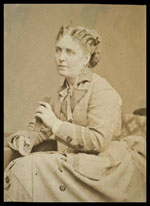
Le Clercq (Le Clerq), Carlotta (Margaret Charlotte) (1833 - 1893) [1]
and the Adelphi (1868-1869). She went with Fechter to the US in 1870 for around 5 years but then continued to appear in London and the provinces until the end of the 1880s. She also taught. The Times (Aug. 14, 1893) and The Era (Aug. 12, 1893) have extensive obituaries. [1] Some sources, e.g. National Portrait Gallery, give her birth year as 1838. This was probably deduced from her obituary in The Times (Aug. 14, 1893) which said she was aged 15 when she appeared with Charles Kean at the Princess's in 1853. However, the baptism record (Ancestry.com) is definitive about 1833. The 1861 census gave her age as 26 implying a birth year around 1835 while for her marriage in 1877 she claimed to be 37, i.e. a birth year around 1840. Given she appeared at the Princess's Theatre in 1848, in an adult rather than child role, 1833 (or possibly 1832 if the baptism was delayed several months) must be correct. [2] Hereford Times (July 27, 1842) [3] The Era (Aug. 29, 1858) wrote of her farewell benefit from the Princess's.
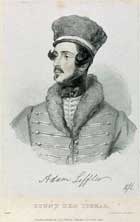
Leffler, Adam (1805 - 1857)
altogether; but ... as a buffo, Mr Leffler, must be an acquisition to any company". The Athenaeum (May, 4, 1839) claimed the "Mr Leffler's beautiful voice is already on the wane", perhaps why he increasingly concentrated on concerts, including in music halls, as well as teaching. Towards the end of his life he confined his singing mainly to the Temple Church in London. In 1840, he went to the U.S. but only seemed to have stayed a few months. He was not the most reliable of performers. In 1839 Balfe had to cancel a performance of Ricci's Scaramuccia when he got a letter from Leffler that "I have drunk so much claret that I can't play tonight"[3]. Notwithstanding Balfe's experience, many years later George Sala in the Leeds Mercury (Aug.13, 1892) wrote: It was not only on the lyric stage that worthy Adam Leffler's talents were displayed. He was well known as an oratorio and concert singer of the first class; and he was highly and deservedly esteemed, not only for his ability as a vocalist, but also for his simple, blameless and generous character. [1] For example, The Era (Apr. 5, 1857) [2] London Courier (Oct. 28, 1831) [3] The Crim. Con. Gazette (Sept. 7, 1839). Charles E. Pearce, Madame Vestris and her Times. (London: Stanley Paul & Co.,1900), p.271 put the date as 1841. The letter was signed Adrian rather than Adam Leffler, perhaps a mistranscription by the author..
Leffler, James Henry (1838 - 1907) [1]James was the second son of Adam Leffler. The first mention of Leffler seems to be at Astley's as part of Augustus Braham's company in May, 1857 [2]. He appeared in the London premiere of Loder's Raymond and Agnes (1859) and in a concert in Birmingham later that year in which he was described as "the eminent basso of the London Concerts"[3]. Otherwise there seems little mention of him until an announcement in The Era (Feb. 3, 1861) that he was going with Sefton Parry's company to South Africa. There, a year later, he married Ellen Prestwich. At some point, Leffler must have made a short return to Britain as The Era (Jul.,1865) advertised him managing a company at Sefton Parry's Greenwich theatre. By July 1866, he was back again in the Cape and they remained in South Africa for the rest of their lives, at one point being joint managers of the D'Arcy Read and Leffler Company and the Harper-Leffler Company [4]. [1] Civil Registration Birth Index, Jan-Mar, 1838. [2] The Era (May 10, 1857). He was named as James A Leffler but it was almost certainly him. [3] Birmingham Post (Dec. 12, 1859) [4] The Era (Oct. 18, 1868), https://esat.sun.ac.za/index.php/Henry_Harper#The_Harper-Leffler_Opera_Company
Leffler, Lucy (Mrs H. Harper) (1832 - 1910)Lucy was Adam Leffler's oldest child and one of his four daughters. She appeared in concerts from around 1857 and occasionally in opera, for example, she had a minor role in the 1860 revival of Loder's The Night Dancers at Covent Garden as part of the Pyne Harrison company. In 1865 she joined Henry Melville's English Opera Company as seconda donna and that year she married Henry Edmund Harper, professor of music. In the late summer of 1868, the Harpers went to Cape Town, South Africa, no doubt encouraged by James, Lucy's brother, who had established himself there [1]. Eventually Henry Harper ran a number of companies including one with James Leffler. By the time of the 1901 census, Lucy had returned to England, Henry having died in 1892. [1] The Era (Oct. 18, 1868)
Lejeune, GeorgeA pupil of the Royal Academy of Music, he took over from Edward Seguin in Macfarren's The Devil's Opera at the end of August 1838 but there is no trace of him after September 1838.
Leng, Annie (1832 - 1893?) [1]Leng was born in Hull the daughter of George Leng, a musician and sister of Fanny Leng. She was a contralto. She was part of several companies including Henry Haigh's (1862), Henry Corri's (1863) and the British Operatic Association from 1863 to 1865. The sisters sang together in Loveday and Summers' English Grand Opera company in 1866 and 1867 and Annie stayed with them for 1868. She continued to perform in concerts and opera until, at least, 1876. [1] As often, census records make her a year younger but baptism records (ancestry.com) record her born on July 12, 1832. There is a death record for an Ann Leng in 1893.
Leng, Fanny (Mrs Oliver Summers) (1839 - 1936?)[1]Leng was born in Hull the daughter of George Leng, a musician, and younger sister of Annie Leng [2]. Her first appearance seems to have been in Newcastle in 1854 as part of Henry Cooper's British Operatic Association, as was Oliver Summers who became her husband the following year. She sang with her sister, Annie in 1866 and 1867 in her husband's, Oliver Summers', company. She took lesser roles than Annie but was more versatile with spoken theatre as well as singing. She continued performing in a wide variety of entertainments in London and the provinces until at least 1885. For some reason in later years she was listed as Mrs Oliver Summers. There was a brief appearance in 1903 when she appeared in a pantomime in Brighton [3]. The 1911 census has a widowed Fanny Summers of 71 years born in Hull stating her profession as dressmaker. Given how often singers made inadequate provision for their old age this was little surprise. The 1921 census showed a Fanny Summers to be living off her own means [4]. [1] Some articles claim 1841 as her birth year as a result of probably using the 1871 census which listed her as Actress and Vocalist aged 30. However, Baptism records and Birth Registrations (ancestry.com) show the 4th quarter of 1839, The 1841 census has 1 1/2 years and the 1851 census as 11. The Leicester Evening Mail (Mar. 2, 1936) included a death notice for a Fanny Summers, whose birthdate would fit with her age of 96 and that she was living in Leicestershire, which agreed with her 1911 and 1921 census entries. [2] 1851 census and wedding certificate (ancestry.com). She married Oliver Summers on April 15, 1865 [3] Brighton Gazette (Jan. 8, 1903). [4] The 1921 census listed her as 81 years 8 months implying she was born in 4Q 1839 in Hull.
Lewin, MrLewin appeared in the premiere of Meyer Lutz's Zaida or the Pearl of Granada at the Royal Amphitheatre, Liverpool, in February, 1859. He was not listed in any other performances for Galer's company but might have been a member of the chorus, whose names would not ordinarily be included.
Lewis, MrUnfortunately the name is too common for any definitive history to be constructed. However, there was a Mr Lewis, a comic actor, who seems to have been with the English Opera House from 1834 through to, at least, 1840. There, he appeared in the premieres of Barnett's The Mountain Sylph (1834) and Romer's The Pacha's Bridal (1836) and in the revival of De Pinna's The Rose of the Alhambra (1836) at the English Opera House. In the autumn of 1840 when he joined the Barnetts' ill fated English opera venture at the Prince's (St James) Theatre, where he appeared in Romer's Fridolin (1840). There is no obvious sign of him after that.
Lowe, MrMr Lowe was in the premiere of Balfe's The Sicilian Bride (1852) but there seems little other information about him
Lowe, Susanna (later Mrs Henri Drayton) (1830? - ?) [1]Little has been found about her Lowe's early career. Her first stage appearance was probably in Alexander Mitchell's short lived The Last Crusade on November 5, 1850 at the New English Opera House in which she was received "in a very flattering manner"[2]. She was listed in a concert at Islington on July 16, 1851, together with Henri Drayton whom she was to marry in 1854. The Illustrated London News (May 2, 1857) said she had been a pupil of Drayton as well as of Francesco Schira and that her popularity stemmed from her time at the Surrey under Emma Romer's management in 1853 that "stamped her as a lady possessing extraordinary histrionic and vocal ability". Much of the rest of her career was spent appearing with her husband particularly in the "parlor operas" organised and often written by him. She appeared in the premieres of Joseph Duggan's Léonie at Drury Lane in March, 1854, Meyer Lutz's Mephistopheles at the Surrey in May, 1855 and Edward Loder's Raymond and Agnes in Manchester in August 1855, when the Draytons were there for a season. In 1859, the Draytons went to the US but returned with the start of the Civil war in 1861. They then went there permanently in 1869, where they were part of Caroline Richings company. She stayed with them after the death of her husband in 1872. [1] According to Lowe's marriage entry she was 24 when she married Henri Drayton in 1854. She also went under the name of Susan Low. Some details of her life and career can by found in Brian C Thompson "Henri Drayton, English Opera and Anglo-American Relations, 1850 - 72", Journal of the Royal Musical Association (Volume 136, No. 2, 2011, pp. 247-303) [2] Weekly Dispatch (Nov. 10, 1850) . It talked of her music not being "calculated to favourably impress us with vocalist's merit".
Lucombe, Charlotte Emma (Mrs Sims Reeves) (1819 - 1895)Lucombe (sometimes Luccombe) was born in Brighton in 1819 [1]. Her father was proprietor of the Royal Musical Arcade and she occasionally performed there [2]. She began appearing in London concerts in May 1839 and by June 1839 was included in a Sacred Harmonic Society concert. The Era (June 2, 1839) was very prescient, "This young lady has an excellent soprano voice and, with proper care, will become a first-rate vocalist". She continued successfully in concerts until the middle of 1846, when it was announced that she had gone to Milan for further study. She then went on to perform in Paris at the end of 1847 [3]. The 1848 French revolution saw her return to England [4] and, by May 1848, she was again singing in concerts often along with Sims Reeves. In the November she made her first English foray into opera at Covent Garden singing in Auber's Haydeé again along with Sims Reeves. The Morning Herald (Nov. 6, 1848) judged that she
would succeed even better on
the stage than
in concert. Of a cavatina, its voluble parade of scale passages being detailed by her with singular neatness and fidelity, and with charming illustrations of good phrasing. Concerts and further opera followed with Sims Reeves whom she married in 1850. Despite giving birth to six children she continued to perform throughout most of the 1850s but a serious illness in 1859 might have hastened a decision to retire completely. By the 1860s she restricted herself to charitable concerts and teaching. She sang in the premiere of Smart's Berta at the Haymarket in 1855. [1] On her marriage certificate and the 1861 census, Lucombe implied a birth date in 1824. However, there is a baptism entry of October 5, 1819 and an 1824 date would imply she was 15 when embarking on her singing career, not impossible but highly unlikely. Both her and Sims Reeves took some years off their ages. [2] A letter to The Era (Jun. 29, 1895) from Jack Moulton. There are several errors in the letter, for example, there were more than two children and he calls her Catherine, so there must be some caution about his evidence. It claimed that she had been born in 1821 but that would have been her sister Lizzie. [3] Brighton Gazette (Aug. 13, 1846, Dec. 9, 1847) [4] Sun (Mar. 29, 1848)
Lyall, Charles (1833 - 1911)
Kurt Gänzl, Victorian Vocalists (London: Routledge, 2018) p.365-376 has a detailed chapter on his career. There is a similar article by him on the Theatre Heritage, Australia site. [1] Charles Reid, The Music Monster. (London: Quartet Books Ltd., 1984) , p.97. |


 |
 |
 |
  |
|
|