  |
 |

|
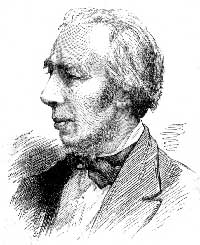
  George Alexander Macfarren1813-1887
Macfarren's Life and WorkBorn a Londoner, Macfarren was one of England's leading composers of the day. He initially learnt music from his father, a dancing-master and dramatist, and later studied with Charles Lucas. A proficient pianist, he entered the Royal Academy of Music in 1829, where he studied composition with Cipriani Potter. His first important work, a symphony in C, was performed at an RAM concert in October, 1830. After studying at the
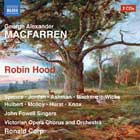
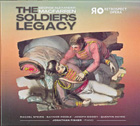
J.W. Davison, stated "Perhaps, of all our native musicians, Mr Macfarren is the one who has most highly and variously distinguished himself". In the early 1860's, Macfarren wrote a string of operas, the best remembered of which was Robin Hood (1860), which played for two seasons and later had a modest success on the touring circuit. To some, Robin Hood was a milestone in the development of a recognized English idiom that depicted rustic charm, just as German's Merrie England would 50 years later. In Robin Hood, the soloists are musically wedded to their character and a part song echoes the old English glee. The Grove Dictionary of Music notes that "Macfarren's handling of the orchestra is bright, uncluttered and masculine; his brass writing is notably good, being less garish than Wallace's and more confident than Sullivan's". Macfarren tried to build upon this English theme in a series of operas in the first half of the 1860's but with only fleeting success. Robin Hood was followed by She Stoops to Conquer and Helvellyn and two comic chamber operas, Jessy Lea and The Soldier's Legacy. The latter two almost certainly influenced Sullivan in his later partnership with Gilbert. Macfarren never achieved the popularity of Balfe or Wallace because he lacked their talent for easy melody. He also differed from other opera composers of the time in that he wrote mainly comic operas and, after his father's death, chose English subjects for his plots. Always afflicted with poor eyesight, by 1860 he had become too blind to write his compositions and had to use an amanuensis but it never dampened his enthusiasm for composition. In later years, his cantatas and oratorios became popular with provincial festivals, such as Leeds, Norwich and Birmingham. He even wrote an Italian opera, Kenilworth, for Covent Garden but it was rejected. In 1875 he succeeded Sterndale Bennett as professor of music at Cambridge and as principal of the RAM. Up to the end of his life, he continued to write, lecture and compose. He was knighted in 1883 on the same day as Arthur Sullivan and George Grove.
Recordings of Macfarren's WorksCommercial Opera Recordings
Other works
Symphonies nos. 4 & 7, Queensland Symphony Orchestra, Werner A. Albert. CPO 999 433-2, 1998. "Chevy Chase" overture on Victorian Concert Overtures, English Northern Philharmonia, David Lloyd-Jones, Hyperion CDH 55088, 2002. Two of his songs, "The Widow Bird" and "Pack Clouds Away" and his variations for clarinet, "Traditions of Shakespeare", can be found on The Victorian Clarinet Tradition, Colin Bradbury, Oliver Davies, Elaine Barry, Clarinet Classics CC0022, 1998. CD. The latter song is on British Music Society. Sixty Glorious Years. Concert organised by the B.M.S., BMS 422. One of his partsongs, "When daisies pied", can be found on The Long Day Closes : English Romantic Partsongs. Canzonetta, Jeffrey Wynn-Davies, SOMM 204, 2005 and "Orpheus with his lute" on O MUSICA: Madrigale & Volkslieder, Dresdner Kreuzchor, Roderich Kreile, DG 000289 459 6122, 2001. Recordings of five of his six string quartets can be downloaded from imslp.org Items of varying quality can be found from a search on www.youtube.com
Books and articles on MacfarrenThe only biography of Macfarren is that by Henry C. Banister, George Alexander Macfarren: his life, works and influence. (London: George Bell and Sons, 1891). It is available online at http://www.archive.org/. Two long articles have been published in the journals of the British Music Society: Maxwell W. Pettit, "Sir George Macfarren; the Compleat Victorian", The Journal of the British Music Society, Volume 8, 1986, pp. 26-35, see https://www.britishmusicsociety.co.uk/publications/. Also Russell Burdekin, "Sir George Alexander Macfarren, his life and his operas", The Journal of the British Music Society, Volume 32, 2010, pp. 84-108, can be found here. George Biddlecombe's English opera from 1834 to 1864 with particular reference to the works of Michael Balfe (New York: Garland Publishing, 1994), pp. 151-164, includes a chapter on Macfarren. He is also the main subject of the chapter "Musical Nationalism in English Romantic Opera" in the The Lost Chord: Essays on Victorian Music, edited by Nicholas Temperley (Bloomington and Indianapolis: Indiana University Press, 1989), pp. 143-158. http://en.wikipedia.org/wiki/George_Alexander_Macfarren gives a good short description of his life and works. William Spark's Musical memories. 3rd edition (London: W. Reeves, 1909), pp. 220-235 has a short biography of him and his brother, Walter. Spark knew them but even so it is not particularly insightful.
Scores and librettosSources of all his librettos can be found here. Each opera web page also has the references for the scores, many of which are held at the Fitzwilliam Museum, Cambridge, along with some of his correspondence. Search https://idiscover.lib.cam.ac.uk/
Web pagesThe are no known websites devoted to Macfarren |
 |
 |
 |
  |
|
|